Bright light autistics: Make sure you give your eyes a break every now and then, even if lights are just so pretty.
Dim light autistics: Do what you need to feel happy and comfortable, but make sure there is enough light if you are reading/writing. You can cause eye problems such as nystagmus if you strain in the dark.
Pressure autistics: I know how calming it is and how good it feels, but make sure you are not cutting off circulation when you pressure stim. Also make sure you don’t bruise yourself and that your rib cage can expand properly. Try not to squeeze yourself somewhere unsafe that you could get trapped.
Olfactory autistics: Try to stick to smelling natural things or things designed to be smelt e.g. Soaps, perfumes,candles. Avoid sniffing cleaning products such as bleach, as they can give off dangerous fumes.
Taste autistics: Think to yourself before you put it in your mouth ‘Is this safe, could I choke?’ It seems mundane but I have choked on a toy car wheel because I got too into mouth stimming. Baby chews are always a safe bet, and they are small (for babies) so they are discreet.
Food issue autistics: I am one of you, I understand. As much as the funky textures of the world are gross, veggies can be gross, foods that touch can be gross but you do need your proteins and vitamins. Try and find some chewable kids multivitamins (like candy, but vitaminny). Make your food look cute, research kids bento boxes and don’t be ashamed if you have one week where you only eat chicken nuggets.
Soft noise autistics: I am also one of you, it is PHYSICALLY PAINFUL sometimes, so block out as much noise as you need, but try not to totally deprive yourself of stimulus. Listen to some quiet music. Make sure you change earplugs regularly if you wear them,to avoid infection. If you wear ear defenders, take them off when you are in a good place to let your ears breath, and try not to wear earrings with them.
Loud noise autistics: as much as the stimulation is needed for you, you need to make sure you don’t damage your ears. Intervals of loud noise are okay, but constant bombardment can cause hearing loss.
Stim safely lovely people
Tag: actuallyautistic
nice things about being autistic
-hearing tiny beautiful sounds like water droplets and leaves crunching
-knowing lots of fun trivia from special interests over the years
-brightly colored things that make ur eyes happy
-that feeling when someone asks you to tell them about sth you know a lot about and it’s infodump time !!!!!!
-the Good Foods™
-when ur logical and rational thinking helps you solve a problem or think of something other people wouldn’t
-nice textures are So Nice: cats, very soft blankets, smooth and cold stones, the inside of a brand new sweatshirt(we could all use some autism positivity. pls reblog and add ur own! it’s ok if they contradict each other or if u don’t relate to all of them; we’re all different)
-happy stimming: when you feel so good it overflows into your whole body so all of you is just!!!!!
-making connections that no one else sees bc while looking for the words to describe something it just clicks into place with something completely different
-crunchy foods
-being so in touch with your identity bc you overanalyze everything, including yourself
-music that you can’t sit still to
-really tight hugs
-petting dogs and holding them and hugging them and playing and they never get bored of you!!
-the sheer joy of learning something new in your SIs
-memorizing things and repeating them over and over in a super SI/echolalia combo
-when you find those people who you don’t have to pretend with and can just be yourself without having to worry
-seeing yourself in fictional characters who are universally adored-being so happy that you bounce up on your toes
-rocking and getting into a rhythm
-when a room has a Good Smell
-swivel chairs
-touching soft things like nice scarves to your face
-when you find a really good mouth noise and repeat it over and over
-spinning in circles
-sweaters with long sleeves so you can play with the cuffs
-when you don’t have to emote like a neurotypicalTM but instead use the body language that comes naturally
-the shimmy joy of paint mixing videos
a Neurotypical: stop doing [stim] its really weird
me, shaking my leg with a tangle in my right hand, a fiber optic toy in the other, and a chew pendant in my mouth: fuck you
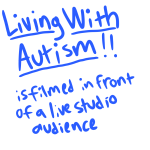
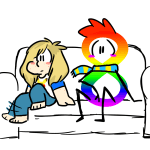
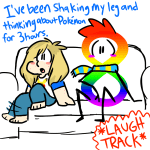
tune in to next week’s enthralling episode!! our main character eats an unskinned apple then immediately dies
nice things about being autistic
-hearing tiny beautiful sounds like water droplets and leaves crunching
-knowing lots of fun trivia from special interests over the years
-brightly colored things that make ur eyes happy
-that feeling when someone asks you to tell them about sth you know a lot about and it’s infodump time !!!!!!
-the Good Foods™
-when ur logical and rational thinking helps you solve a problem or think of something other people wouldn’t
-nice textures are So Nice: cats, very soft blankets, smooth and cold stones, the inside of a brand new sweatshirt(we could all use some autism positivity. pls reblog and add ur own! it’s ok if they contradict each other or if u don’t relate to all of them; we’re all different)
-happy stimming: when you feel so good it overflows into your whole body so all of you is just!!!!!
-making connections that no one else sees bc while looking for the words to describe something it just clicks into place with something completely different
-crunchy foods
-being so in touch with your identity bc you overanalyze everything, including yourself
-music that you can’t sit still to
-really tight hugs
-petting dogs and holding them and hugging them and playing and they never get bored of you!!
-the sheer joy of learning something new in your SIs
-memorizing things and repeating them over and over in a super SI/echolalia combo
-when you find those people who you don’t have to pretend with and can just be yourself without having to worry
-seeing yourself in fictional characters who are universally adored-being so happy that you bounce up on your toes
-rocking and getting into a rhythm
-when a room has a Good Smell
-swivel chairs
-touching soft things like nice scarves to your face
-when you find a really good mouth noise and repeat it over and over
-spinning in circles
-sweaters with long sleeves so you can play with the cuffs
-when you don’t have to emote like a neurotypicalTM but instead use the body language that comes naturally
-the shimmy joy of paint mixing videos
Well about the therspy for autistic people you do realise that society ha certain standards and you cannot behave however you want to you have to follow the rules and if you have autism you mght have trouble behaving properly
Aww, nonny. Let us guess: you’re a kid. We’ll try to make this easy and educational, because this is an important life lesson.
See, there are really three classes of social rules:
- Rules people follow because breaking them hurts others,
- Rules people follow because breaking them hurts you, and
- Rules people follow because it’s convention and custom.
A good example of case 3 would be “don’t flap your hands when you’re happy.” It’s something that harms literally no one in any way, but it’s customarily not done. If you do it, people might look at you funny, but the only consequences are those that people choose to impose. These are “rules” only as far as the weight of society backs them up, and there’s basically no reason for them to exist.
A good example of case 2 would be jaywalking rules. They really only exist to keep you from getting hit by a car. If you break them, the consequences primarily fall on you. There’s good reason for them, but people decide all the time whether or not they’re willing to risk the consequences.
A good example of case 1 would be “don’t fucking torture children.” These rules exist because the consequences fall on people who didn’t do anything wrong, and are often devastating. Breaking them is Wrong, and we should be against it.
But here you are arguing that autistic people breaking case 3 rules means that we should break case 1 rules to enforce them.
We don’t “have autism,” we are autistic. And yes, we have trouble behaving “properly,” partially because of that, partially because we’re multiple, mad, queer, and trans. Our very existence is breaking a number of type 3 rules. Do you really think that justifies torturing us into looking normal?
tl;dr: There is a huge difference between “don’t hurt people” and “behave properly,” and we have no particular use for the latter.
Autistics are godly beings here on earth to study various topics of interest, if you stop them from stimming or special interest-ing, doom will be upon you. whether in this lifetime or another.
What is autism?
Autism is a natural variation of human neurology which is categorized as a developmental disability. About 1% of the worlds population is autistic. Autism is a lifelong condition meaning that autistic people are born autistic and that they will die autistic. You cannot “catch autism” or “become autistic” like you can risk becoming mentally or physically ill – neither vaccines or heavy metals or gluten will make you autistic if you aren’t born with it. You also can’t cure autism or recover from it – but all autistic people can live fulfilling, happy lives with the right accommodations so an autism diagnosis isn’t the death sentence that many people make it out to be. Autism isn’t a diagnosis which can be clearly separated from who you are and how you see the world – it affects every aspect about of how you think about, experience and interact with the world around you. There are many different aspects of being autistic which makes it hard to summarize the condition, but I’ll do my best to introduce you to some of the common autistic traits and experiences in this post.
- Sensory processing. Autistic people’s sensory processing is different from most people’s sensory processing. This means that autistic people may be over- or undersensitive to different sensory input. This means that we may have trouble with sounds, touches, smells, tastes, etc that most people can easily tolerate or block out or that we may seek out loud music, blinking lights, bright colors, spicy food, strong smells and activities which provide physical activity and deep pressure. Many autistic people lack the filter that most people have which makes them able to block out background sounds, meaning that the ticking of a clock, the buzzing from a lamp or two people having a conversation nearby might make us unable to focus on what we’re supposed to be focusing on. This means that many autistic people will have trouble focusing in situations with lots of sensory input, for example situations where many people are gathered together, and that we are more easily overwhelmed and stressed out by different sensory input than allistic (non-autistc) people.
- Stimming. Stimming is short for self-stimulatory behavior, meaning a behavior which is meant to stimulate one of your senses. Some common stims are rocking back and forth, bouncing your legs or feet, hand flapping, hand wringing and repeating words and sentences, but a stim can be any kind of repeated movement or action which stimulates on your senses. Stimming can thus be many different things – you can stim by smelling, touching, watching, moving, tasting and listening. The reason behind why autistic people stim is tied up in the fact that autistic people’s sensory processing tend to be atypical – when there’s a lot of overwhelming, stressing sensory input, providing your own repeated sensory input by listening to a song on repeat or rocking back or forth or smelling something you like the smell of may help you focus and calm down. Autistic people also stim to express emotions – it’s a natural part of our body language just like smiling or frowning is a natural part of most people’s body language. We may jump up and down and flap our hands when excited where most people would simply smile, or we may rock back and forth and press our hands against or faces where other people would cry. That being said, an autistic person doesn’t need a certain, deep reason for stimming – we often do it simply because it’s fun and because it feels good.
- Shutdowns and meltdowns. Shutdowns are meltdowns are both responses to extreme distress – they’re often caused by unpleasant, overwhelming sensory input that the autistic person in question is unable to escape, but they can also be caused by strong negative emotions. A meltdown is an outward reaction to said distress where a shutdown is an inwards reaction. An autistic person having a meltdown is a person who has reached a point where they are no longer in control of their own body – they’re experiencing and flight or fight response, so to say. An autistic person may scream, lash out, cry, smash things and run away during a meltdown. Shutdowns are another possible respons to a similar situation – during those, the autistic person may become unresponsive, locked in place, unable to talk, etc. You should never get mad at autistic people or hold them responsible for having meltdowns and shutdowns – they’ve reached a place where they’re so distressed that they’re losing control of themselves and instead of distressing them further, you should help them escape or resolve what’s causing the distress – after you have given them plenty of time to calm down and recover, that is.
- Trouble with non-verbal communication such as body language, facial expressions and tone of voice. Autism is a disability which affects communication and the ability to socialize, meaning that autistic people may have trouble reading, using and comprehending body language, facial expressions and tone of voice just like they may have trouble learning, conforming to and applying social rules. We may not be able to take a hint that someone’s not interested in talking to us just like we may not notice when someone’s interested in us romantically or sexually. We have trouble noticing when other people are bored or tired or sad or angry and we might thus often come across as uncaring or annoying in social situations. Our trouble with reading other people and seeing the nuance in their body language, facial expressions and tone of voice also means that many autistic people have trouble grasping sarcasm, irony and metaphors.
- Trouble with words and speech. Most autistic people have some degree of trouble with expressing their thoughts and opinions through spoken words.This is because most of us don’t naturally think in words – we may experience, think about and process the world around us in pictures or sensory experiences and we may thus have trouble transforming those input and experiences into words. We may also have trouble with the process of speaking, not because there’s something physically wrong with us but because we can have trouble with making our throats and mouths pronounce the words or because we may have trouble with going from thinking a word to succeeding with the process of actually saying it out loud. It’s common for autistic people to have periods where they aren’t able to speak – we call it going nonverbal – and some autistic people can’t speak at all. That doesn’t mean that they can’t think or communicate, though – they may instead communicate via written words, text to speech apps, facilitated typing, sign language, picture boards, etc.
- Executive dysfunction. Executive functioning is what allows us to go from thinking about or wanting to do something to actually doing it, it’s what makes us able to keep the different steps required to complete a task straight in our heads and it’s what makes us able to plan and focus on different tasks. Autistic people often have trouble with executive functioning which makes many everyday tasks that most people can just do without thinking twice about it really hard. Imagine that you want to do laundry but your brain doesn’t automatically come up with the steps required to complete the task – take the laundry basket to the washing machine, open the washing machine, put clothes into the washing machine, add soap, etc – instead you’re just standing there, knowing that you somehow have to go from dirty laundry to clean clothes without knowing how to go about it. This is a problem for many autistic people which makes many everyday tasks hard or impossible to do without help. We may need someone to prompt us to do what we need to do or we may need someone to talk us through the steps or we may need visual or written instructions which illustrate the steps required to complete a certain task. Executive dysfunction is the main reason why many autistic people have trouble with basic, everyday tasks that most people their age can easily do without help.
- Special interests. Many autistic people have a topic or a thing that they’re deeply, passionately interested in. Some autistic people compare having a special interest to being in love – it’s what your mind drifts to when there’s nothing else to occupy it, it’s the only thing you want to talk about, it’s the first thing you think of when you wake up in the morning and it’s the last thing you think of before you fall asleep. This intense level of interest and passion often allows autistic people to excel in their areas of interest even when they may have trouble with basic everyday tasks. Some autistic people have special interests that lasts a life time, other people experience that their special interests change every couple years or maybe every couple months – or in some cases, every couple weeks. Some autistic people have one special interest at a time, other autistic people have many special interests.
- Routines. Since the world is often very chaotic and confusing for autistic people due to our atypical sensory processing and our struggles with executive dysfunction and social interaction, many autistic people rely on routines to create a sense of order in a confusing and chaotic world. We usually like to do the same things in the exact same way every day and if something breaks our routine or if something unexpected happens – or if somebody suggests an impulsive trip to the beach on a day where we hadn’t expected to do anything but the usual – it may result in shutdowns or meltdowns. If you want an autistic person to break or change their routine it’s recommended that you warn them in good time and that you give them plenty of time to prepare and adjust.
- Unique points of view and different ways of thinking. Due to the fact that autistic people experience the world so differently from how most people experience it, we see the world from a different angle – often allowing us to come up with ideas or thoughts or input or solutions that you wouldn’t get anywhere else. Autistic people often have unique points of view and unusual ways or thinking and learning and this is often a strength – as we say in the autistic community, we are different, not less.
I’ve now summarized some of the more common autistic traits and I hope that this post gave you a better understanding of what autism is and what it means to be autistic. Feel free to reblog and share this post far and wide if you found it helpful or educational.
don’t use “autistic” as an insult
don’t use “autistic” as an insult
don’t use “autistic” as an insult
don’t use “autistic” as an insult
Why do so many abled people see us accepting our limitations as us giving up and hope of improvement and/or placing limitations on ourselves?
 ruby-dear archive