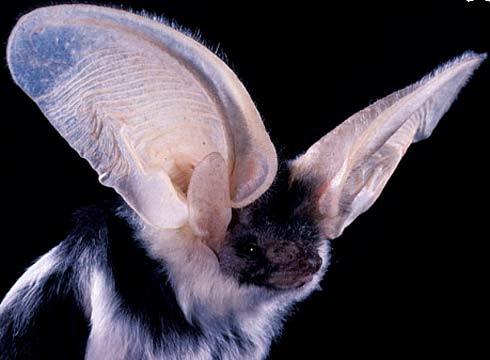
Have you ever thought to yourself, “Man, I wish there was an animal with ears one-third the length of its entire body.”
WELL CONGRATULATIONS, SPOTTED BATS EXIST
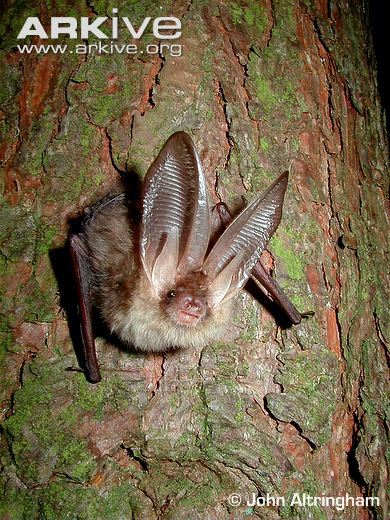
But maybe now you’re thinking, “that’s cool and all, but like, isn’t there an animal with like, ears that take up FOUR-FIFTHS of its body? Because that would really make my day…”
Again, CONGRATULATIONS.
That’s the brown long-eared bat, and it is good at hearing.
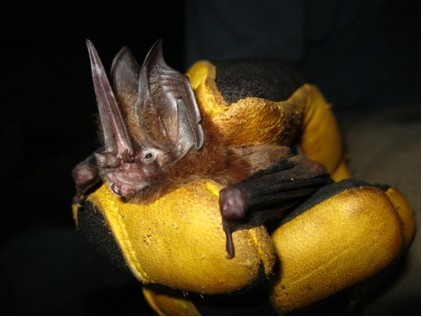
But you, eternally unsatisfied, mutter under your breath, “I mean cool but what if the animal also had a nose that was-”
STOP. LOOK AT WHAT I AM HOLDING IN MY HAND*.
That’s a sword-nosed bat and he JUST. DOESN’T CARE. ABOUT YOUR ARBITRARY BODY STANDARDS.
(*sadly that is not actually my hand in the photo)
Now, looking at these bats all together, your desire for increasingly unattainable body types satisfied, you may next find yourself pondering this:
“The bat is the only species of mammal with true powered flight, and also the only flying species, ever, to have external ears. How the heck are they able to fly without those ears (and sometimes noses!) presenting a significant problem? Wouldn’t they act like big, awkward parachutes strapped to the nose of a plane?”
Well friend, this is also what many scientists also thought, when examining the species of bats with exceptionally large ears. They figured that the increased drag caused by facial appendages was just a trade-off that the bats had to deal with in order to get better echolocation abilities to seek out their prey. The fact that most big-eared bats were slow-flying ambush predators rather than zippy little jet fighters seemed to confirm this.
However, no one actually tested the theory until 2015, when scientists from Bristol University ordered a bunch of bat heads from various bat labs (yes… actual heads from actual deceased bats), scanned them, 3D printed them, attached them to dummies, and put them in a wind tunnel.
Thaaaaaaat’s science!
To spare you a lot of physics talk, what they found was that big ears and big noseleaves aren’t causing significant drag for flying bats at all. Or rather, they ARE causing drag, but it’s offset by the fact that they also generate LIFT, which cancels out the drag and sometimes even improves the flying capabilities of the bat! Indeed, the lift generated by big ears may even help bats keep their heads up as they fly, which is important because they need to direct their echolocation beam as they move.
So big ears = no problem bucko. Again, bats prove themselves unique compared to every other flying animal.
One final note on bats with big ears, because it’s cute. While they may pose no problem- and even be helpful- while flying, these big ears can get in the way while the bat is roosting, trying to fit into crevices, socialize, and such. But the bats have a creative solution for this, too. They just curl up their ears. Below are spotted bats and brown long-eared bats, the same two species depicted at the beginning of the post:


 ruby-dear archive