Me: *picks up cat* Explain to me why you’re so cute.
Cat: :3
Me: Interesting…
Tag: cats
why cat is better than birb
2 more leg
big teeths
can scratch
squishy belly
do not poop in skysorry birb
so today a public health official guy came into my class to give a lecture on disaster awareness and he was talking about house fires and mentioned that the reason people most likely die during a house fire is because they refuse to leave their pet inside or they go back to get their pet. and right when he said this my friend immediately turned his head and looked at me and in that moment I had the most complete and genuine acceptance take over my body. I would 100% in front of my family and Jesus himself walk straight back into some raging inferno that was once my house to go get my fat cat. I nodded back
the best part of this post is reading all the tags from animal people who would also go back to save their pets. like no hesitation. walk backwards from heaven straight back into hell. someone even said they would go back for their fish. amazing
I’d get my turtles outright but yea I’d def go back for ‘em
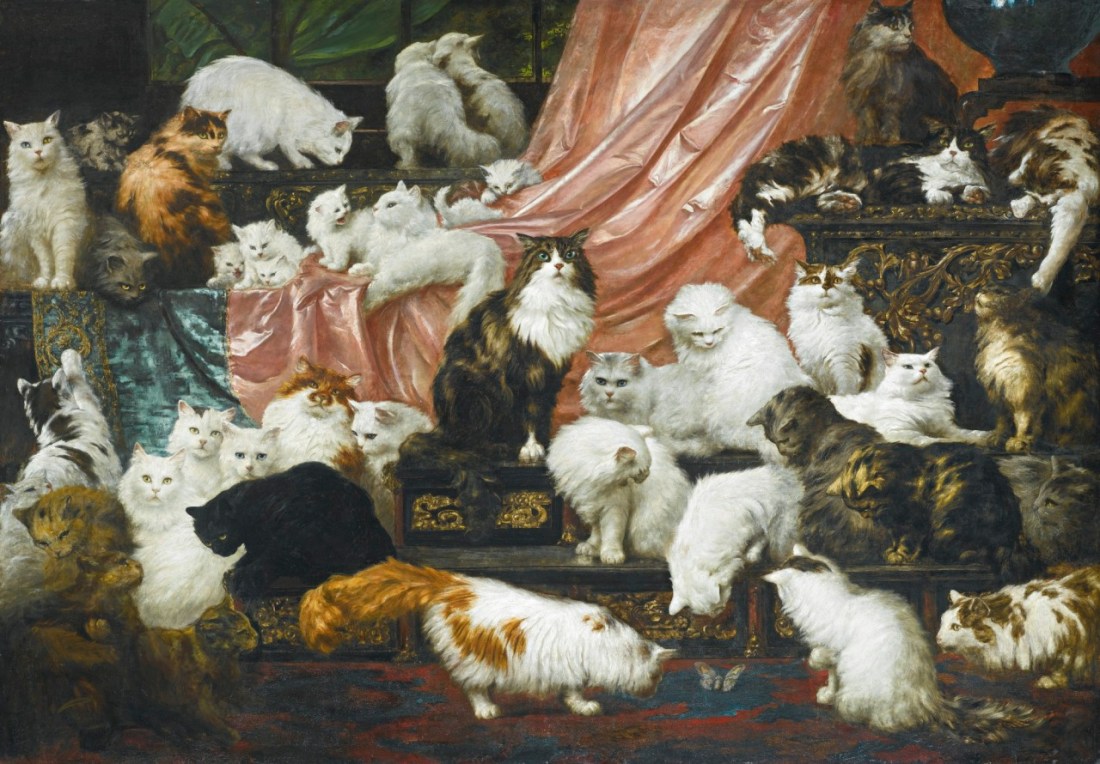
My Wife’s Lovers, 1891, Carl Kahler
God I hope I am immortalised by my husband for having 40 cats
Fun facts:
- It cost $5,000 in 1888 to have this painting made, which is more than $120,000 in today’s money.
- I say 1888 because it took three years for Kahler to complete, reportedly because he spent most of the time studying and sketching each cat to get a feel for their personality.
- It was painted for Kate Johnson, the title was her husband’s idea though, proving him the most patient and good-humored husband in the history of crazy cat ladies.
- Speaking of cat ladies, the picture actually contains 42 cats. Or more specifically, Mrs. Johnson’s 42 most favorite cats. She had 350 in total.
- It sold at auction via Sotheby’s a few days ago for over $800,000 dollars, vastly more than its $200,000-$300,000 estimate.
- The buyer is a private collector in California.
- Probably someone who really, really likes cats.
- I mean, really likes cats.
I just feel for the maids who had to clean her house.
They would have not even had a vacuum cleaner to help them.







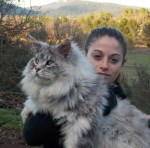
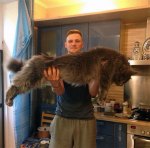


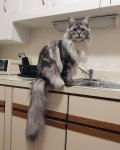
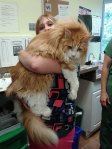










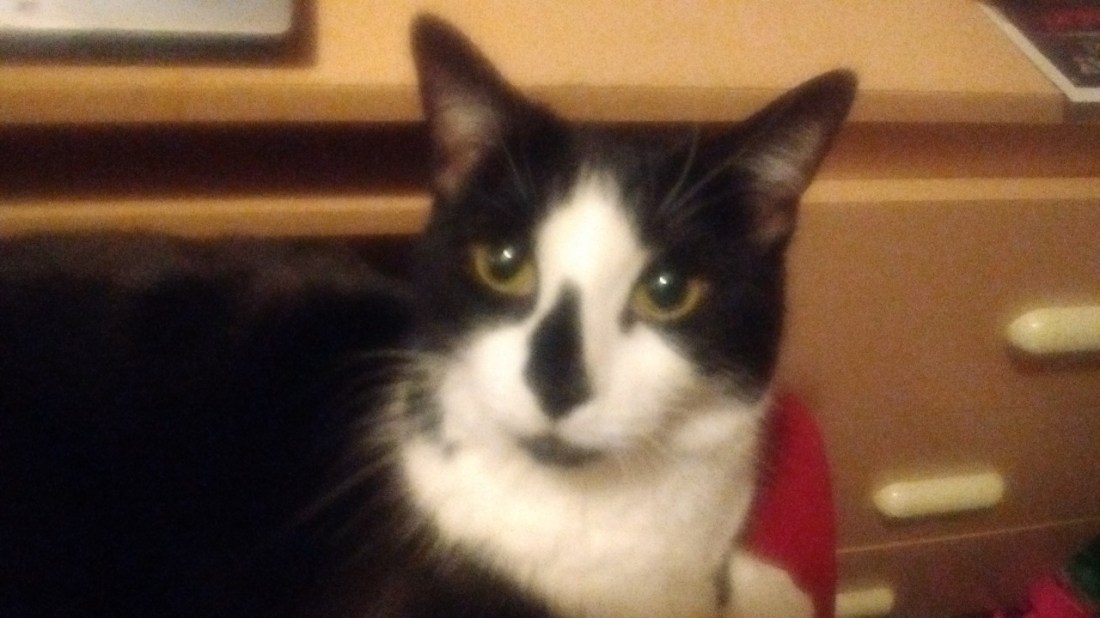
here we have Miss Satan, being adorable
Let’s talk about the astounding similarities between cats and autistic people, and how we should make them the official autism mascot instead of that godawful puzzle piece
Oh man, now you’ve got me going!
Firstly, cats stim. They purr, swish their tails and knead their paws against pillows, blankets, and other soft things. Many cats actively seek out sensory experiences, like listening to birds singing, lying in a sunbeam, rolling against the grass, etc.
Cats have sensory sensitivities— many of them dislike walking on certain flooring, touching certain textures, and certain smells or sounds may make them anxious. Their fur is very sensitive, they can sense the lightest touch, or speck of lint, or dust and their skin will quiver until they can lick or rub it off. When they become overstimulated cats retreat into a small, dark place to recover.
Cats love routine. Many cats know the exact time that their owners wake up in the morning and will wake them. A cat with a routine is a happy cat— they love to have their meals or soft food on a schedule and will learn their owner’s schedule. Cats will become anxious when the schedule is disrupted or if their owner doesn’t follow their usual routine.
In the same vein cats are very wary and/or anxious when it comes to the introduction of new things or people into their environment. Cats require time and patience to get used to anything or anyone newly introduced. Cats also feel anxious when existing furniture is rearranged or when a new smell (like an air freshener) is introduced into the home.
Cats often have “special interests”, a particular activity or thing that they love and can spend hours enjoying. It could be playing with a particular toy, chewing on something, listening to the radio, or watching the clothes in the washing machine. My cat Kitty has a certain ball that she fixates on and will happily enjoy and obsess over for hours.
Finally, cats have a very distinct and subtle body language. The difference is particularly evident when compared with the exuberant, unsubtle dog. The slightest twitch of a tail or turn of the ears, the frequency and timing of blinks, and the positioning of the tail in relation to the body are all little movements that can express much. To the untrained eye it may appear as if a cat is bored, aloof, or unaware of its surroundings. But once you learn to recognize cat body language and understand cat communication, you’ll be amazed at the depth of emotion and how expressive your cat really is.
Yes, I think that cats have a lot in common with autistic people. And that’s wonderful!
 ruby-dear archive