


vaspider:

alihsi:

abductedbyreality:

inkahootz18:

littlebluboxx:

silentauroriamthereal:

nofreedomlove:

image

image

image

imageimage

image

image

image

Source

“Image Credit: Carol Rossetti

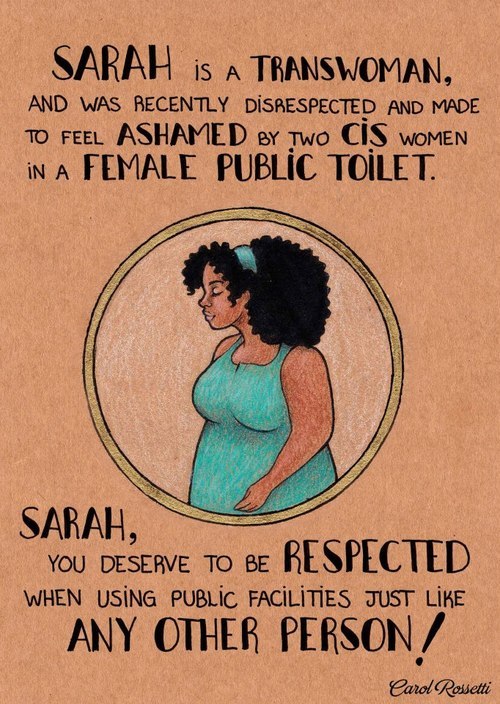
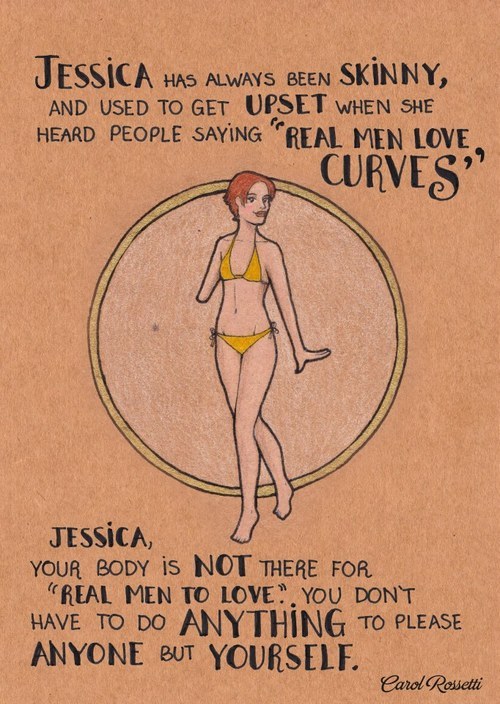
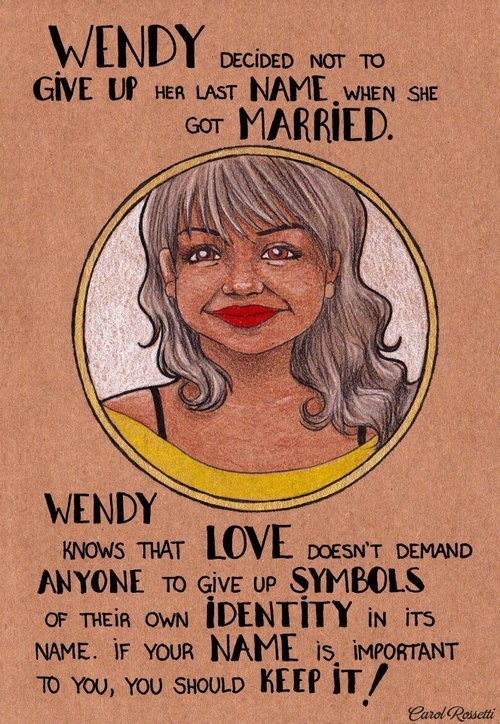
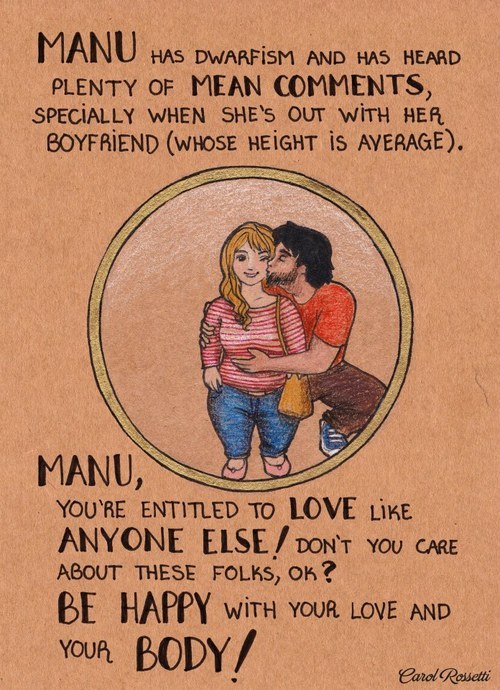
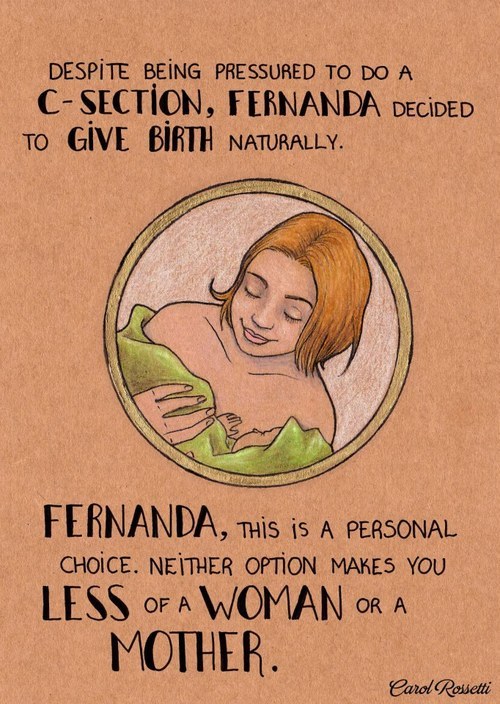
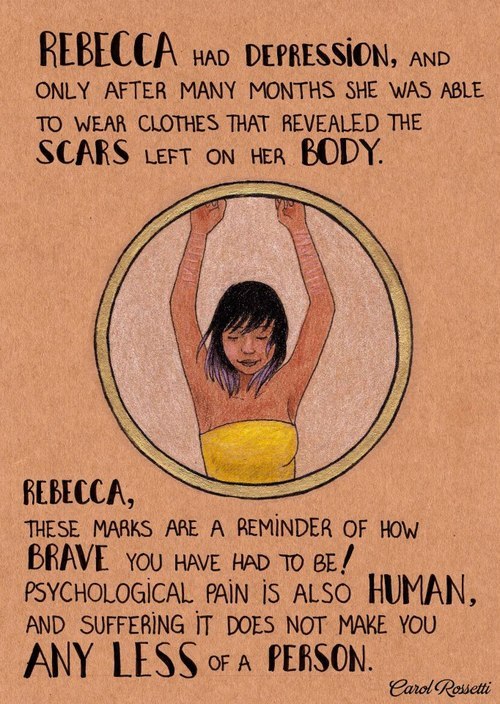
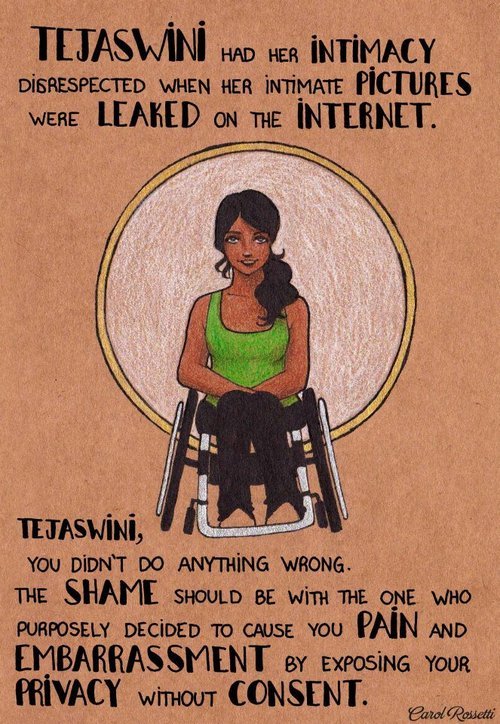
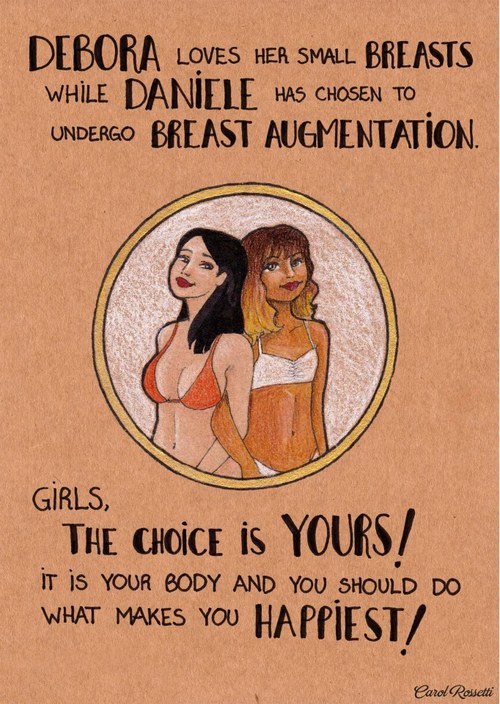
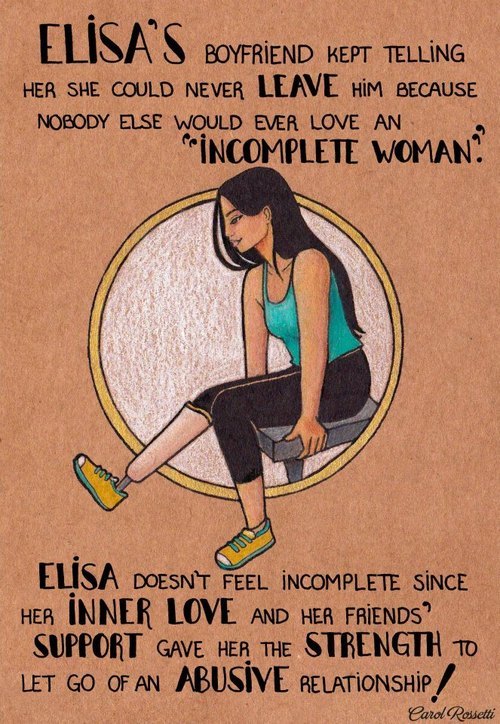
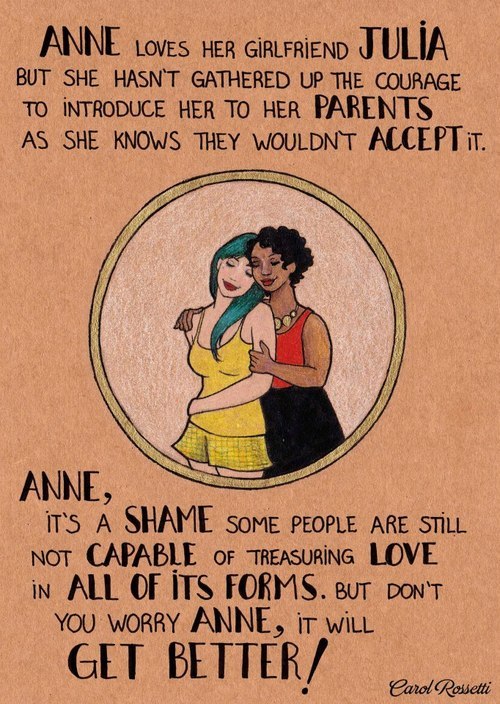
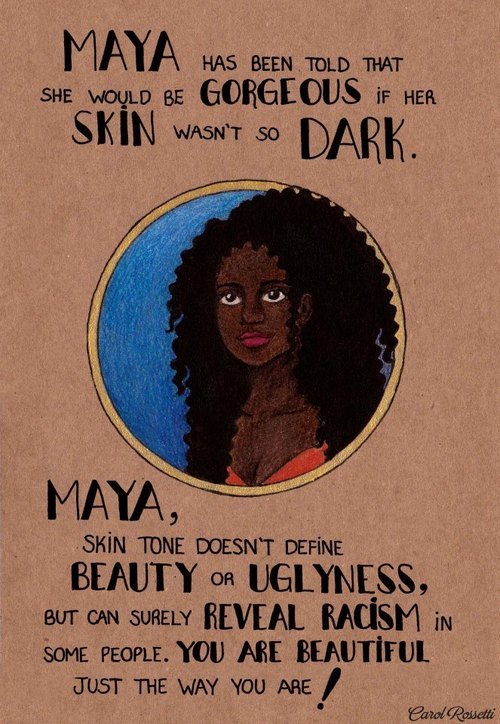
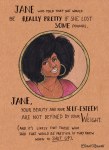
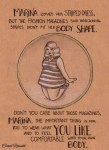
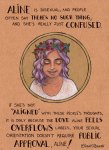
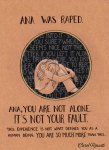
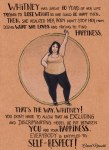
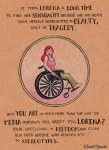
When Brazilian graphic designer Carol Rossetti began posting colorful illustrations of women and their stories to Facebook, she had no idea how popular they would become. 

Thousands of shares throughout the world later, the appeal of Rosetti’s work is clear. Much like the street art phenomenon Stop Telling Women To Smile, Rossetti’s empowering images are the kind you want to post on every street corner, as both a reminder and affirmation of women’s bodily autonomy. 

“It has always bothered me, the world’s attempts to control women’s bodies, behavior and identities,” Rossetti told Mic via email. “It’s a kind of oppression so deeply entangled in our culture that most people don’t even see it’s there, and how cruel it can be.”

Rossetti’s illustrations touch upon an impressive range of intersectional topics, including LGBTQ identity, body image, ageism, racism, sexism and ableism. Some characters are based on the experiences of friends or her own life, while others draw inspiration from the stories many women have shared across the Internet. 

“I see those situations I portray every day,” she wrote. “I lived some of them myself.”

Despite quickly garnering thousands of enthusiastic comments and shares on Facebook, the project started as something personal — so personal, in fact, that Rossetti is still figuring out what to call it. For now, the images reside in albums simply titled “WOMEN in english!“ or ”Mujeres en español!“ which is fitting: Rossetti’s illustrations encompass a vast set of experiences that together create a powerful picture of both women’s identity and oppression.

One of the most interesting aspects of the project is the way it has struck such a global chord. Rossetti originally wrote the text of the illustrations in Portuguese, and then worked with an Australian woman to translate them to English. A group of Israeli feminists also took it upon themselves to create versions of the illustrations in Hebrew. Now, more people have reached out to Rossetti through Facebook and offered to translate her work into even more languages. Next on the docket? Spanish, Russian, German and Lithuanian.

It’s an inspiring show of global solidarity, but the message of Rossetti’s art is clear in any language. Above all, her images celebrate being true to oneself, respecting others and questioning what society tells us is acceptable or beautiful.

“I can’t change the world by myself,” Rossetti said. “But I’d love to know that my work made people review their privileges and be more open to understanding and respecting one another.”

From the site: All images courtesy Carol Rossetti and used with permission. You can find more illustrations, as well as more languages, on her Facebook page.

Oooh. I reblogged a partial version of this recently but I didn’t know how many more there were! I LOVE these!

OK SO THERE ARE TONS MORE OF THESE OF THE ARTISTS FB PAGE. GUYS THESE ARE AWESOME.image

image

image

image

image

image

LOOKimage

image

image

image

ATimage

image

image

image

THESEimage

image

LETS APPLAUD CAROL ROSSETTI EVERYONEimage

image

image

image

image

 image

image

image

image

image

image

image

image

LOOK

Um, these are like the best thing ever.

Just slow clap it out. ;w;

So many more!

I love all of these so much. Every time I see them I smile.

I want a print of the Amanda one, I think.

thatdiabolicalfeminist:

Feminism only reinforces violent systems of oppression unless it also takes aim at white supremacy, compulsory heterosexuality, transmisogyny and general transphobia, ableism, whorephobia, classism, antisemitism and islamophobia.

A feminist movement that fails to stand against other types of systemic violence only shifts the burden of oppression around, especially among women.

Feminism can and should be a force for completely disrupting structural violence. We need to think a lot bigger.

pocketfulofsterek:

You know how 1st world feminists get told that they don’t need feminism? They’re told that they should be glad they’re not “really oppressed” like the women in 3rd world countries. That things could always be worse.

You know what my mother tells me? She says I don’t need feminism because I should be glad I’m born in an urban city of Pakistan. She says, at least I wasn’t born in a rural area where girls are married off to men twice their age. That things could always be worse.

And our house maid, Shabana, who was married to her uncle at 15 and, at 18, has 2 children, she doesn’t even know what feminism is. She was told by her father that she should be glad her husband doesn’t beat her and hasn’t thrown tehzaab (acid) at her. That things could always be worse.

Am I the only one seeing a very disturbing pattern here?

englishproblems:

batmanisagatewaydrug:

batmanisagatewaydrug:

batmanisagatewaydrug:

batmanisagatewaydrug:

batmanisagatewaydrug:

batmanisagatewaydrug:

batmanisagatewaydrug:

Okay this is a very half-formed thought and I’m not sure where I’m going with it yet, but the fact that the teen girls we’re meant to root for in so many Teen Girl Stories are the ones who are bad at or uncomfortable with performing femininity probably isn’t a coincidence.
And it’s mostly not because the people who create media about teen girls want to shatter gender roles; it’s more likely because even though femininity is the prescribed way for female-identified people to behave it’s also seen as something largely unpleasant.

Um. I’m going somewhere with this, maybe after I finish my homework. But I want to hang onto this thought.
ex: the proof of Regina George’s redemption is giving up her hyper-femininity in favor of aggressive, masculine-coded sports

ex 2: in High School Musical Gabriella and Taylor have a bonding moment over their nail beds being “history”, contrasting themselves with the more conventionally feminine cheerleaders. Gabriella is hardly butch but her femininity is portrayed in a more soft, natural way to contrast with Sharpay’s louder, more eye-catching and implicitly unpleasant outfits. Sharpay is not the bad guy because she’s girly, but she’s maybe more girly because she’s the bad guy.

Because caring about your appearance is BAD, that’s a character trait that we associate with Bad Characters, and most especially Bad Women Characters. Sharpay and Regina care so much about their looks because they’re shallow, and that means they’ve unpleasant.

All teenage girls are told, one way or another, that they should care about their looks and put effort into being attractive. But in the stories about teen girls, the only ones visibly caring about their looks are the bitches.

If a Nice Girl ™ wants to make an effort to look good she better have an excuse, like prom or a date or finding out she’s a princess.

Princess Diaries makes such a good point about this, actually. Mia is supposed to be attractive, because she’s the protagonist, but she also can’t do it herself, because that will make her look like just another Vapid Teen Girl. So she gets a makeover handed to her. Pretty is something that Just Happens to nice girls, because if you work at it you’re a bitch.

(Not to mention pretty isn’t compatible with frizzy hair or glasses.)

God, fucking Harry Potter isn’t exempt from this. Hermione gets contrasted with Lavender and it’s so obvious that Lavender is Wrong, because she’s goofy and sentimental and clingy and girly girly girly, in sharp contrast with Hermione “I only do my hair for the Yule Ball, I’ve got shit to do” Granger over here. And that’s not shitting on Hermione! It’s just clear that there’s a very particular sort of teenage girl we’re supposed to like in HP and she doesn’t care about Girl Things.

Even Sky High, the greatest teen movie of all time, falls into this. The women on the good guys’ side are Layla – soft femme, a little tomboyish, has strong opinions – and Magenta – vaguely punkish, v snarky – neither of whom do feminity “right”.

On the bad side there’s Penny, who’s a LITERAL evil cheerleader hivemind, and Gwen, who’s both the most popular girl in school and the actual super villain behind everything. These things are not coincidences.

At times like this, I thank the universe for Legally Blonde. Elle is a hyper feminine and hella smart lady who is bashed throughout the entire movie for being Too Girly.

Does she change who she is to fit in? No. She works just as hard as everyone else, harder even as she isn’t invited to any study groups because she is Too Girly, and she does it all while wearing pink, sparkles, and this season’s Prada shoes, thank you very much.