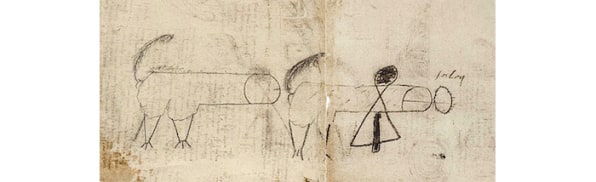
i deserve unrestricted access to old churches and castles i want to know all the secrets
i work in a castle and have unrestricted access and let me tell you sometimes knowing all the secrets……is worse
please share with us the secrets
what you guys want then, huh? You want royal family gossip? You wanna hear about the Duchess of York sneaking her lover into her room through a secret door? Or do you want the gross shit, like the skull stuck on the pike on top of the keep which nobody really knows how it got there but maintenance says it’s too high up to get down? Or the fact we tell kids the skeleton in the store room is ‘just a dummy’ but in reality nobody can break the grate without collapsing the wall?
Ya’ll wanna hear about the G H O S T D O G?????
I in fact want to hear all of those like way too much for it to be healthy
you wanna see some badass shit from the early 20th century?? The Lumière brothers created the first full color photograph… in fucking 1903! So these dudes dyed potatoes (in red, blue, and green), mashed them down into just pure fuckin’ starch, and used these dyed potato starches as filters to block out/let in certain wavelengths of light. They coated one side of a glass plate with the starches and sensitized the other side with a mixture of gelatin and light sensitive materials (silver nitrate) and loaded these plates in their cameras.. This is a really simple explanation of the process and I may have missed some things
* Italy’s long coastline and developed economy draws many illegal immigrants from Eastern Europe and Africa, many of whom are passing through to move North to Germany, the Netherlands, or Scandinavia. Latin American cocaine, Southwest Asian heroine, and organized crime have all found an active market.
* Many single Italians, male and female, live at home with their parents until their 30s or beyond, even if they have a job. The family stands at the heart of Italian society.
* The world’s first operas were composed in Italy at the end of the 16th century. Opera reached the height of popularity in the 19th century, when the works of Rossini, Puccini, and Verdi became popular. The late tenor Luciano Pavarotti is a national celebrity, and Claudio Monteverdi is regarded as the father of the modern opera.
* The Tower of Pisa is famous for leaning over 14 feet from the perpendicular. It was built in 1173 and began to lean soon after, probably due to a poorly laid foundation. After reconstruction efforts in 2008, engineers declared the tower would be stable for at least another 200 years.
* The Arabs brought dried pasta to Italy in the 13th century (though fresh pasta was made before then). It was commonly eaten with honey and sugar – tomato sauce was not added until the 17th century. The old-fashioned way of eating pasta was with the fingers, arm held high and head tilted back. Pasta traditionally was made by the mother of the household, who passed the precious technique to her daughters. There are currently more than 500 different types of pasta eaten in Italy.
Happy Pride Month Eleanor Roosevelt was queer, the Little Mermaid is a gay love story, James Dean liked men, Emily Dickinson was a lesbian, Nikola Tesla was asexual, Freddie Mercury was bisexual & British Indian, and black trans women pioneered the gay rights movement.
Florence Nightingale was a lesbian, Leonardo da Vinci was gay, Michelangelo too, Jane Austen liked women, Hatshepsut was not cisgender, and Alexander the Great was a power bottom
Freddie Mercury is well known for his attraction to men but was also linked to several women, including Barbara Valentin whom he lived with shortly before he died. Friends have talked about being invited into their bed and walking in on them having sex (documentary Freddie Mercury: The Great Pretender)
Marsha P. Johnson and Sylvia Rivera are two of the best-known activists who fought in the Stonewall riots
“Authors can’t use it in fantasy fiction, eh? We’ll see about that…”
–Terry Pratchett, probably
Try to implement anything but a conservative’s sixth grade education level of medieval or Victorian times and you will butt into this. all. the. time.
There was a literaly fad in the 1890′s for nipple rings for all genders(and NO, it was NOT under the mistaken belief that it would help breastfeeding–there’s LOTS of doctors’ writing at the time telling people to STOP and that they thought it would ruin the breast’s ability to breastfeed well, etc). It was straight up because the Victorians were freaks, okay Imagine trying to make a Victorian character with nipple rings. IMAGINE THE ACCUSATIONS OF GROSS HISTORICAL INACCURACY
people just really, REALLY have entrenched ideas of what people in the past were like
tell them the vikings were clean, had a complex democratic legal system, respected women, had freeform rap battles, and had child support payments? theyd call you a liar
tell them that chopsticks became popular in china during the bronze age because street food vendors were all the rage and they wanted to have disposable eating utensils? theyll say youre making that up
tell them native americans had a trade network stretching from canada to peru and built sacred mounds bigger then the pyramids of giza? you are some SJW twisting facts
ancient egypt had circular saws, debt cards, and eye surgery? are you high?
our misconception of medieval peasants being illiterate and living in poverty in one room mud huts being their own creation as part of a century long tax aversion scam? you stole that from the game of thrones reject bin
iron age india had stone telescopes, air conditioning, and the number 0 along with all ‘arabic’ numbers including algebra and calculus? i understand some of those words.
romans had accurate maps detailing vacation travel times along with a star rating for hotels along the way, fast food restaurants, swiss army knives, black soldiers in brittany, traded with china, and that soldiers wrote thank-you notes when their parents sent them underwear in the mail? but they thought the earth was flat!
ancient bronze age mesopotamia had pedantic complaints sent to merchants about crappy goods, comedic performances, and transgender/nobinary representation? what are you smoking?
how is it possible to love fictional characters this much and also have people always been this way?
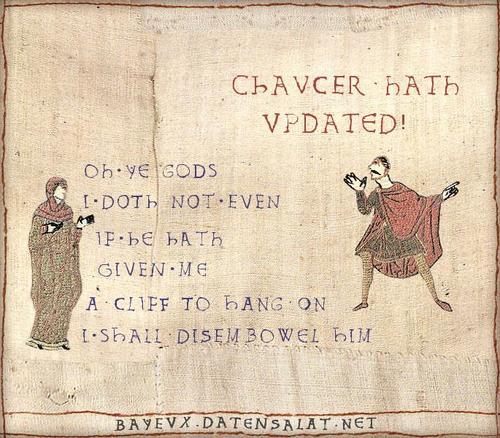
like, did queen elizabeth lie in bed late sometimes thinking ‘VERILY I CANNOT EVEN FOR MERCUTIO HATH SLAIN ME WITH FEELS’
was caesar like ‘ET TU ODYSSEUS’
sometimes i wonder
oh my GOD
the answer is yes they did. there’s a lot of research about the highly emotional reactions to the first novels widely available in print.
here’s a thing; the printing press was invented in 1450 and whilst it was revolutionary it wasn’t very good. but then it got better over time and by the 16th century there were publications, novels, scientific journals, folios, pamphlets and newspapers all over Europe. at first most were educational or theological, or reprints of classical works.
however, novels gained in popularity, as basically what most people wanted was to read for pleasure. they became salacious, extremely dramatic, with tragic heroines and doomed love and flawed heroes (see classical literature, only more extreme.) books in the form of letters were common. sensationalism was par the course and apparently used to teach moral lessons. there was also a lot of erotica floating around.
but here’s the thing: due to the greater availability of literature and the rise of comfy furniture (i shit you not this is an actual historical fact, the 16th and 17th century was when beds and chairs got comfy) people started reading novels for pleasure, women especially. as these novels were highly emotional, they too became…highly emotional. there are loads of contemporary reports of young women especially fainting, having hysterics, or crying fits lasting for days due to the death of a character or their otp’s doomed love. they became insensible over books and characters, and were very vocal about it. men weren’t immune-there’s a long letter a middle-aged man wrote to the author of his favourite work basically saying that the novel is too sad, he can’t handle all his feels, if they don’t get together he won’t be able to go on, and his heart is already broken at the heroine’s tragic state (IIRC ehh).
conservatives at the time were seriously worried about the effects of literature on people’s mental health, and thought it damaging to both morals and society. so basically yes it is exactly like what happens on tumblr when we cry over attractive British men, only my historical theory (get me) is that their emotions were even more intense, as they hadn’t had a life of sensationalist media to numb the pain for them beforehand in the same way we do, nor did they have the giant group therapy session that is tumblr.
(don’t even get me started on the classical/early medieval dudes and their boners for the Iliad i will be here all week. suffice to say, the members of the Byzantine court used Homeric puns instead of talking normally to each other if someone who hand’t studied the classics was in the room. they had dickish fandom in-jokes. boom.)
I needed to know this.
See, we’re all just the current steps in a time-honored tradition! (And this post is good to read along with Affectingly’s post this week about old-school-fandom-and-history-and-stuff.
Ancient Iliad fandom is intense
Alexander the Great and and his boyfriend totally RPed Achilles and Patroclus. Alexander shipped that hard. (It’s possible that this story is apocryphal, but that would just mean that ancient historians were writing RPS about Alexander and Hephaestion RPing Iliad slash and honestly that’s just as good).
And then there’s this gem from Plato:
“Very different was the reward of the true love of Achilles towards his lover Patroclus – his lover and not his love (the notion that Patroclus was the beloved one is a foolish error into which Aeschylus has fallen, for Achilles was surely the fairer of the two, fairer also than all the other heroes; and, as Homer informs us, he was still beardless, and younger far)” – Symposium
That’s right: 4th Century BCE arguments about who topped. Nihil novi sub sole my friends.
More on this glorious subject from people who know way more than I do
Man I love this post.
And to add my personal favourite story: after reading Samuel Richardson’s Clarissa in the 18th century, Elizabeth Echlin decided that she was NOT HAPPY with the ending and basically wrote her own fix-it fic. No-one dies and Lovelace (the villain) was totally reformed and became a super nice guy. It’s completely OOC and incredibly poorly written and it’s beautiful.
Also, so many women fell in love with the villain, Lovelace, and wrote to Richardson about it, that he kept adding new bits with each edition to highlight what a hideous person Lovelace was. So it’s almost unsurprising that reading novels in this period was actually considered dangerous because it gave women unrealistic ideas about men and made them easier prey for rakes.
Basically, “I want my own Christian Grey” has been a thing for hundreds of years.
Also a thing with fix-it/everyone lives AUs: at various points in time but especially in the mid 1800s-early 1900s (aka roughly Victorian though there were periods of this earlier as well) a huge thing was to “fix” Shakespeare (as well as most theater/novels) to be in line with current morality. Good characters live, bad characters are terribly punished – but not, you know, grusomely, because what would the ladies think? So you have like, productions of King Lear where Cordelia lives and so do Regan and Goneril, but they’re VERY SORRY.
Aka all your problematic faves are redeemed and Everyone Lives! AUs for every protag.
Slightly tangential but I wanted to add my own favorite account of Chinese fandom to this~ I don’t know how many people here have heard of the Chinese novel A Dream of Red Mansions (红楼梦), but it is, arguably, the most famous Chinese novel ever written (There are four Chinese novel classics and A Dream of Red Mansions is considered the top of that list). It was written during the Qing dynasty by 曹雪芹, but became a banned book due to its critique of societal institutions and pro-democracy themes. As a result, the original ending of the book was lost and only the first 80 chapters remained. There are quite a few versions of how the current ending of the book came to be, but one of them is basically about how He Shen, one of Emperor Qian Long’s most powerful advisers, was such a super-fan of the book, he hired two writers to archive and reform the novel from the few remaining manuscripts there were. In order to convince the Emperor to remove the ban on the book, he had the writers essentially write a fanfiction ending to the book that would mitigate the anti-establishment themes. However, He Shen thought that the first version of the ending was too tragic (even though the whole book is basically a tragedy) so he had the writers go back and write a happier ending for him (the current final 40 chapters). He then presented the book to the Emperor and successfully convinced him to remove the ban on the book.
According to incomplete estimates, A Dream of Red Mansions spawned over 20 spin offs, retellings, and alternate versions (in the form of operas, plays, etc.) during the Qing Dynasty alone.
In 1979, fans (albeit academic ones) started publishing a bi-monthly journal dedicated to analysis (read: meta) on A Dream of Red Mansions. In fact, the novel’s fandom is so vast and qualified and rooted in academics of Chinese literature that there is an entire field of study (beginning in the Qing dynasty) of just this one novel, called 红学. Think of it as Shakespearean studies, but only on one play. This field of study has schools of thought and specific specializations (as in: Psych analyses, Economics analyses, Historical analyses, etc.) that span pretty much every academic field anyone can think of.
(That being said, I’ve read A Dream of Red Mansions and can honestly say that I’ve never read its peer in either English or Chinese. If for nothing else, read it because you would never otherwise believe that a man from the Qing dynasty could write such a heart-breakingly feminist novel with such a diverse cast of female characters given all the bitching and moaning we hear from male content-creators nowadays)
the beauty of archival research *sigh*
Don’t even get me started on the Don Quixote fandom. Long story short, the first volume was published 10 years before the second. What do you think happened between those years? There was fanfic. Duh.
I wouldn’t find it hard to believe that there was a little more out there than we’re aware of, but one unofficial sequel pissed off Cervantes so much that it probably prompted him to write his own. At the very least, he spends a couple of chapters in volume two blasting the author. It’s so meta. Especially since that sequel was written under a screename pseudonym and no one knows who was really behind it.
I want you to write more on this topic plz.
I’m so glad someone wrote about Dream of Red Mansions / Story of the Stone because if they didn’t, I would.
For the record, those last forty chapters, essentially one of the most famous fanfics ever written, was only “decanonized” by the Chinese government in the past few years, leaving the book tragically, if accurately, incomplete. (The story I heard about their history was very different than the above post, but they exist one way or another so I’m not going to complain.)
The shipping for that book was absurd, too. The editor of my copy talks about records of men duelling on the street over their OTPs.
Wanna know the thing I’ve learned about this year that’s changed how I look at the world more than anything?
Pinsetters.
You know, the machines at bowling alleys that set the pins back up after you’ve knocked them down.
The thing about pinsetters is that they’re oddly difficult to get ahold of. In fact, most models of pinsetter haven’t been manufactured at all since the 1970s; the majority of bowling alleys get theirs secondhand, and competition for the increasingly rare supply of spare parts can be fierce.
You probably knew that there were once over a dozen different varieties of bowling that were popular throughout North America; what you might not know is that most of those varieties have gone extinct not because nobody is interested in playing them, but because the particular kind of pinsetter they require can no longer be obtained in sufficient quantities to keep bowling alleys in business. Indeed, the most common reason for a bowling alley to go under isn’t lack of customers, but having pinsetters that can’t be repaired when they break down because the parts and the institutional knowledge required to do so no longer exist!
Like, people will cross the planet to get their hands on replacement pinsetter parts. It’s like a goddamn post-apocalyptic scavenger hunt out there to keep these ancient contraptions in working order.
For bowling.
I’m sure it’s a metaphor for something or other, but hell if I can figure out what.
there’s something really satisfying about the fact that sir arthur conan doyle was the most gullible motherfucker on the planet
sir arthur conan doyle: here is my oc, he is a super genius who solves all the mysteries using the power of deductive reasoning
also sir arthur conan doyle: i have deduced that these fairies are real as shit
sir arthur conan doyle: there’s only one way to determine if these fairies are real… i will give you girls these cameras, that i bought myself, and then i will develop the photos, so i know they haven’t been tampered with
some girls who took selfies in the woods with paper cutouts on hatpins: that seems reasonable
harry houdini, after showing his good friend how he got trickedby a con artist: so as you can see, anyone can make it seem as if they can talk to ghosts
sir arthur conan doyle: harry… i can’t believe you never told me you can talk to ghosts, for real, using actual magic
Doyle and Houdini’s relationship is the funniest thing in the entire history of the skepticism movement
Doyle was SO CONVINCED that Houdini had legit magic powers and could turn into smoke or some shit to escape things and Houdini was like “no seriously it’s a trick let me show you how it works” and Doyle was all “it hurts me that you won’t trust me with this secret”
If memory serves he eventually decided that Houdini was subconsciously magic and in denial
















 ruby-dear archive