– Thomas Jefferson having a mockingbird named Dick
– Andrew Jackson’s parrot being kicked out of his funeral because it wouldn’t stop saying ‘fuck’
– Andrew Jackson beating the shit out of his would-be assassin with a cane
– Andrew Jackson throwing a huge public party in the White House for his inauguration and having to sneak out because it got out of hand. He could only sneak back in when someone got the idea to move all the alcohol outside.
– John Laurens getting out of bed at Valley Forge and hitting his head on the ceiling
– Ben Franklin wanting the national bird to be the turkey
– Caleb Brewster’s reason for joining the continental army basically being that he just wanted to kick some ass and have some fun
– Caleb Brewster signing his name in big letters on spy reports for the Culper Ring
– George Washington, Thomas Jefferson, and Alexander Hamilton going on a fishing trip together, for Washington’s health
– gay brothels being called “Molly Houses”
– Benedict Arnold ploughing through 337 pages of William Blackstone’s “Commentaries” just to find the word militia for a secret code
– baby farmers (this is some crazy shit look it up)
– Thomas Jefferson having a ram that he called “An abominable animal”. It killed a young boy on the White House lawn.
– Aaron Burr having to ban snacks from the senate floor
– George Washington refusing to respond to a British letter because they didn’t address him correctly
– Aaron Burr being attacked by bedbugs and then proceeding to sleep on the floor for five hours
– Thomas Jefferson being a frat boy in college
– Alexander Hamilton being reported dead after going to burn barns and then showing up hours later soaking wet because he fell into a river
– Martha Washington outliving four children and two husbands and still saying that the worst day of her life was when Thomas Jefferson came to visit
I grew up believing that women had contributed nothing to the world until the 1960′s. So once I became a feminist I started collecting information on women in history, and here’s my collection so far, in no particular order.
Lepa Svetozara Radić (1925–1943) was a partisan executed at the age of 17 for shooting at German soldiers during WW2. As her captors tied the noose around her neck, they offered her a way out of the gallows by revealing her comrades and leaders identities. She responded that she was not a traitor to her people and they would reveal themselves when they avenged her death. She was the youngest winner of the Order of the People’s Hero of Yugoslavia, awarded in 1951
23 year old Phyllis Latour Doyle was British spy who parachuted into occupied Normandy in 1944 on a reconnaissance mission in preparation for D-day. She relayed 135 secret messages before France was finally liberated.
Catherine Leroy, War Photographer starting with the Vietnam war. She was taken a prisoner of war. When released she continued to be a war photographer until her death in 2006.
Lieutenant Pavlichenko was a Ukrainian sniper in WWII, with a total of 309 kills, including 36 enemy snipers. After being wounded, she toured the US to promote friendship between the two countries, and was called ‘fat’ by one of her interviewers, which she found rather amusing.
Johanna Hannie “Jannetje” Schaft was born in Haarlem. She studied in Amsterdam had many Jewish friends. During WWII she aided many people who were hiding from the Germans and began working in resistance movements. She helped to assassinate two nazis. She was later captured and executed. Her last words were “I shoot better than you.”.
Nancy wake was a resistance spy in WWII, and was so hated by the Germans that at one point she was their most wanted person with a price of 5 million francs on her head. During one of her missions, while parachuting into occupied France, her parachute became tangled in a tree. A french agent commented that he wished that all trees would bear such beautiful fruit, to which she replied “Don’t give me any of that French shit!”, and later that evening she killed a German sentry with her bare hands.
After her husband was killed in WWII, Violette Szabo began working for the resistance. In her work, she helped to sabotage a railroad and passed along secret information. She was captured and executed at a concentration camp at age 23.
Grace Hopper was a computer scientist who invented the first ever compiler. Her invention makes every single computer program you use possible.
Mona Louise Parsons was a member of an informal resistance group in the Netherlands during WWII. After her resistance network was infiltrated, she was captured and was the first Canadian woman to be imprisoned by the Nazis. She was originally sentenced to death by firing squad, but the sentence was lowered to hard lard labor in a prison camp. She escaped.
Simone Segouin was a Parisian rebel who killed an unknown number of Germans and captured 25 with the aid of her submachine gun. She was present at the liberation of Paris and was later awarded the ‘croix de guerre’.
Mary Edwards Walker is the only woman to have ever won an American Medal of Honor. She earned it for her work as a surgeon during the Civil War. It was revoked in 1917, but she wore it until hear death two years later. It was restored posthumously.
Italian neuroscientist won a Nobel Prize for her discovery of nerve growth factor. She died aged 103.
EDIT
jinxedinks added: Her name was Rita Levi-Montalcini. She was jewish, and so from 1938 until the end of the fascist regime in Italy she was forbidden from working at university. She set up a makeshift lab in her bedroom and continued with her research throughout the war.
A snapshot of the women of color in the woman’s army corps on Staten Island
This is an ongoing project of mine, and I’ll update this as much as I can (It’s not all WWII stuff, I’ve got separate folders for separate achievements).
File this under: The History I Wish I’d Been Taught As A Little Girl
Part 2
Annie Jump Cannon was an american astronomer and, in addition to possibly having one of the best names in history, was co-creator of one of the first scientific classification systems of stars, based on temperature.
Melba Roy Moutan was a Harvard educated mathematician who led a team of mathematicians at NASA, nicknamed ‘Computers’ for their number processing prowess.
Joyce Jacobson Kaufman was a chemist who developed the concept of conformational topology, and studied at Johns Hopkins University before it officially allowed women entry in 1970.
Vera Rubin is an astronomer and has co-authored 114 peer reviewed papers. She specializes in the study of dark matter and galaxy rotation rates.
Mary Sherman Morgan was a rocket scientist who invented hydyne, a liquid fuel that powered the USA’s Jupiter C-rocket.
Chien-Siung Wu was a physicist who worked on the Manhattan Project, as well as experimental radioactive studies. She was the first woman to become president of the American Physical Society.
Mildred Catherine Rebstock was the first person to synthesize the antibiotic chloromycetin.
Ruby Hirose was a chemist who conducted vital research about an infant paralysis vaccine.
Hattie Elizabeth Alexander was a pediatrician and microbiologist who developed a remedy for Haemophilus influenzae, and conducted vital research on antibiotic resistance.
Marie Tharp was a scientist who mapped the floor of the Atlantic Ocean and provided proof of continental drift.
Mae Jamison is an astronaut who holds a degree in chemical engineering from Stanford University and was the first black woman in space.
Ada Lovelace was a mathematician and considered to be the world’s first computer programmer.
Patricia E Bath is ophthalmologist and the inventor of the Laserphaco Probe, which is used to treat cataracts.
Barbara McClintock won a Nobel prize for her discovery that genes could move in and between chromosomes.
That’s it for now, part three will be on its way. (Josephine Baker was requested in the first installment, just know I did not forget her! She’s in a different folder, titled ‘famous people you didn’t know were complete badasses, and she, along with Hedy Lamar and Audrey Hepburn will be in the next installment 🙂 )
Part 3
Josephine Baker, though today remembered for her dancing, singing, and larger than life personality, actually played a significant role in WWII. She joined Women’s Auxiliary of the Free French Air Force, got her pilot’s license in 1933, and by 1944 she raised 3,143,000 francs for the war effort. She entertained the troops, which was a doubly whammy of justice. She refused to entertain segregated troops, so the French military was forced to integrate the troops for all her performances. She also smuggled secret messages in her music across countless borders.
Audrey Hepburn is known as one of the most beautiful and talent actresses of the 1950′s, but her contributions to the world started far before her first film and continued until well after her cinematic heyday. In WWII stricken Austria, Audrey, then an aspiring ballerina, would give secret ballet performances to raise money for the Austrian resistance. She even helped smuggle secret messages for the resistance. On one such occasion, she was stopped by an enemy soldier. He asked her what she was doing and she, pretending not to understand, presented him with a bouquet of wildflowers she’d been absentmindedly picking. She was let go and the message was delivered safely. It was her experience in the war which would later prompt her to become one of the founders of UNICEF.
Hedy Lamarr was an actress well known for her piercing gaze and deadpan wit. What she’s less known for is being a brilliant mathematician who invented the frequency hopping spread spectrum. Without her invention, we wouldn’t have bluetooth or wifi.
Ching Shih was one of the world’s most successful pirates. At the death of her (pirate) husband, the former prostitute took command of his ships and started her pirating career. At the height of her career she commanded 1800 ships and more than 80,000 male and female pirates. She became powerful enough to challenge every empire’s naval forces in the world and her Red Flag Fleet was feared from the Chinese coast to Malaysia. Unable to defeat her, the Chinese government caved and offered her amnesty. She surprised everyone by taking it and became one of the few pirates in history to retire. She also took care of her crew even after her retirement; most of Ching’s pirates were pardoned. She died a respectable millionaire.
Sophie School was an active member of the White Rose non-violent resistance group in WWII Germany. In 1943 she, along with her brother and the rest of the White Rose were arrested for passing out leaflets encouraging passive resistance. She and her brother were beheaded by guillotine just a few hours later. Her last words were “How can we expect righteousness to prevail when there is hardly anyone willing to give himself up individually to a righteous cause. Such a fine, sunny day, and I have to go, but what does my death matter, if through us, thousands of people are awakened and stirred to action?”
(Written by Emporer-of-nerds) Constance Markievicz (was a) Very important figure in the Irish independence movement, first woman elected to the British House of Commons, and one of the first women to hold a cabinet position in government (Minister for Labour of the Irish Republic (which was a short-lived revolutionary state predating the current Ireland/Éire))!
Lady Mary Wortley Montagu was an English ambassador to Turkey in the early 1700s, and documented her experience carefully. When she saw the Turkish perform an early method of small-pox vaccination, she urgently wrote home. She is responsible for the first variolation small-pox vaccinations in Europe.
Marie Curie is fairly well known. Unfortunately she’s often known as the ‘assistant’ to her husband. She was a pioneering physicist and chemist, who’s work with radiation was groundbreaking. She was the first woman to win a Nobel prize and the only one to win one in two fields for her discovery of polonium and uranium. It’s also notable that she was the first woman in Europe to receive a doctorate degree. Her discoveries made the x-ray machine possible, and Curie immediately put it to work. She invented a small, mobile type of x-ray machine and worked with her daughter at casualty collection points in WWI, using the machine to locate shrapnel and bullets in wounded soldiers. She died of pernicious anemia, a result of years of radioactive exposure. Many of her notebooks are still too radioactive to be read.
Margherita Hack was an Italian astrophysicist and became administrator of the Trieste Astronomical Observatory, bringing it to renowned respect and fame. She was a prolific science writer and was awarded the Targa Giuseppe Piazzi for the scientific research, and later the Cortina Ulisse Prize for scientific dissemination. Asteroid 8558 Hack, discovered in 1995, was named in her honor.
(This installment was a little all over the place as far as achievements go, and short, since it was mostly requests! Hypatia of Alexandria was also requested but she, along with Sappho and others, are getting their own installment. The next installment will center around women of the literary world!)
Great respect for this!
Note that there were many many more, both before and after photography was invented.
Don’t ever let some fuckboy tell you that women just cleaned and cooked until very recently.
I feel like I want, like, amazing, huge portraits painted of all these women in the finest fine art oils, and for them to adorn hallowed halls everywhere.
@your-naked-magic-oh-dear-lord Sophie Scholl has a movie. It’s called Sophie Scholl: Die Letzen Tage. It’s in German but there are websites that have subtitles. I highly recommend it.
Thanks a lot!
“Battle for Sevastopole”, the movie for the Ukrainian female sniper Liudmyla Mykhailivna Pavlychenko.
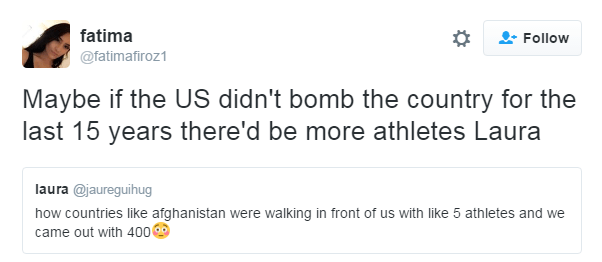
It’s like millennials do not understand that middle east has been at war for 1000′s of years. That we intervened on behalf of Kuwait. That without “bombing” people that want to kill and oppress others, millions will be murdered and tortured.
“at war for 1000′s of years”
you clearly know nothing about Afghanistan nor the middle east
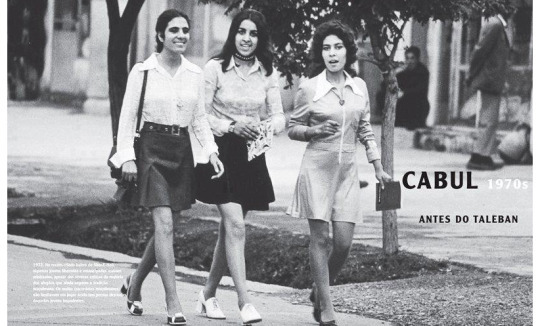
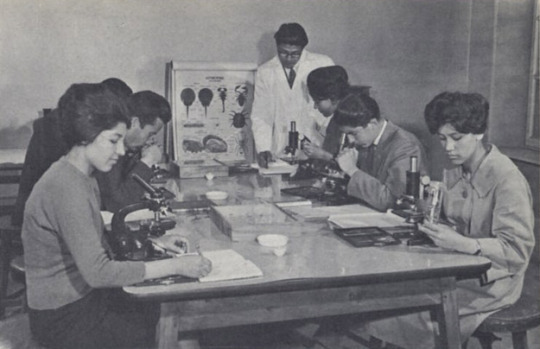
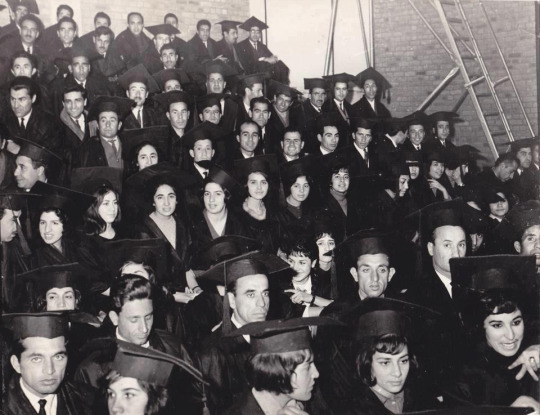
It’s interesting to note that when the communist government came to power in Afghanistan in the late 70′s, one of the first things they did was declare equality of the sexes, made education for girls mandatory, & banned child marriages. The conservative tribal leaders who the US armed & funded (& who later became the Taliban) declared this to be a “war on Islam” & fought against the central government.
The US had no problem back then with encouraging the growth of Islamic conservatism to counter socialism/communism. You created your biggest enemy & you have no one to blame but yourselves.
BLESS THIS POST
its crazy to me how the US talks about war in the middle east as if its this ancient problem inherent to the area instead of a recent problem created by western countries to further their own interests.
Women have more power and agency in Shakespeare’s comedies than in his tragedies, and usually there are more of them with more speaking time, so I’m pretty sure what Shakespeare’s saying is “men ruin everything” because everyone fucking dies when men are in charge but when women are in charge you get married and live happily ever after
I think you’re reading too far into things, kiddo. Take a break from your women’s studies major and get some fresh air.
Right. Well, I’m a historian, so allow me to elaborate.
One of the most important aspects of the Puritan/Protestant revolution (in the 1590’s in particular) was the foregrounding of marriage as the most appropriate way of life. It often comes as a surprise when people learn this, but Puritans took an absolutely positive view of sexuality within the context of marriage. Clergy were encouraged to lead by example and marry and have children, as opposed to Catholic clergy who prized virginity above all else.Through his comedies, Shakespeare was promoting this new way of life which had never been promoted before. The dogma, thanks to the church, had always been “durr hburr women are evil sex is bad celibacy is your ticket to salvation.” All that changed in Shakespeare’s time, and thanks to him we get a view of the world where marriage, women, and sexuality are in fact the key to salvation.
The difference between the structure of a comedy and a tragedy is that the former is cyclical, and the latter a downward curve. Comedies weren’t stupid fun about the lighter side of life. The definition of a comedy was not a funny play. They were plays that began in turmoil and ended in reconciliation and renewal. They showed the audience the path to salvation, with the comic ending of a happy marriage leaving the promise of societal regeneration intact. Meanwhile, in the tragedies, there is no such promise of regeneration or salvation. The characters destroy themselves. The world in which they live is not sustainable. It leads to a dead end, with no promise of new life.
And so, in comedies, the women are the movers and shakers. They get things done. They move the machinery of the plot along. In tragedies, though women have an important part to play, they are often morally bankrupt as compared to the women of comedies, or if they are morally sound, they are disenfranchised and ignored, and refused the chance to contribute to the society in which they live. Let’s look at some examples.
In Romeo and Juliet, the play ends in tragedy because no-one listens to Juliet. Her father and Paris both insist they know what’s right for her, and they refuse to listen to her pleas for clemency. Juliet begs them – screams, cries, manipulates, tells them outright I cannot marry, just wait a week before you make me marry Paris, just a week, please and they ignore her, and force her into increasingly desperate straits, until at last the two young lovers kill themselves. The message? This violent, hate-filled patriarchal world is unsustainable. The promise of regeneration is cut down with the deaths of these children. Compare to Othello. This is the most horrifying and intimate tragedy of all, with the climax taking place in a bedroom as a husband smothers his young wife. The tragedy here could easily have been averted if Othello had listened to Desdemona and Emilia instead of Iago. The message? This society, built on racism and misogyny and martial, masculine honour, is unsustainable, and cannot regenerate itself. The very horror of it lies in the murder of two wives.
How about Hamlet? Ophelia is a disempowered character, but if Hamlet had listened to her, and not mistreated her, and if her father hadn’t controlled every aspect of her life, then perhaps she wouldn’t have committed suicide. The final scene of carnage is prompted by Laertes and Hamlet furiously grappling over her corpse. When Ophelia dies, any chance of reconciliation dies with her. The world collapses in on itself. This society is unsustainable. King Lear – we all know that this is prompted by Cordelia’s silence, her unwillingness to bend the knee and flatter in the face of tyranny. It is Lear’s disproportionate response to this that sets off the tragedy, and we get a play that is about entropy, aging and the destruction of the social order.
There are exceptions to the rule. I’m sure a lot of you are crying out “but Lady Macbeth!” and it’s a good point. However, in terms of raw power, neither Lady Macbeth nor the witches are as powerful as they appear. The only power they possess is the ability to influence Macbeth; but ultimately it is Macbeth’s own ambition that prompts him to murder Duncan, and it is he who escalates the situation while Lady Macbeth suffers a breakdown. In this case you have women who are allowed to influence the play, but do so for the worse; they fail to be the good moral compasses needed. Goneril, Regan and Gertrude are similarly comparable; they possess a measure of power, but do not use it for good, and again society cannot renew itself.
Now we come to the comedies, where women do have the most control over the plot. The most powerful example is Rosalind in As You Like It. She pulls the strings in every avenue of the plot, and it is thanks to her control that reconciliation is achieved at the end, and all end up happily married. Much Ado About Nothing pivots around a woman’s anger over the abuse of her innocent cousin. If the men were left in charge in this play, no-one would be married at the end, and it would certainly end in tragedy. But Beatrice stands up and rails against men for their cruel conduct towards women and says that famous, spine-tingling line – oh God, that I were a man! I would eat his heart in the marketplace. And Benedick, her suitor, listens to her. He realises that his misogynistic view of the world is wrong and he takes steps to change it. He challenges his male friends for their conduct, parts company with the prince, and by doing this he wins his lady’s hand. The entire happy ending is dependent on the men realising that they must trust, love and respect women. Now it is a society that is worthy of being perpetuated. Regeneration and salvation lies in equality between the sexes and the love husbands and wives cherish for each other. The Merry Wives of Windsor – here we have men learning to trust and respect their wives, Flastaff learning his lesson for trying to seduce married women, and a daughter tricking everyone so she can marry the man she truly loves. A Midsummer Night’s Dream? The turmoil begins because three men are trying to force Hermia to marry someone she does not love, and Helena has been cruelly mistreated. At the end, happiness and harmony comes when the women are allowed to marry the men of their choosing, and it is these marriages that are blessed by the fairies.
What of the romances? In The Tempest, Prospero holds the power, but it is Miranda who is the key to salvation and a happy ending. Without his daughter, it is likely Prospero would have turned into a murderous revenger. The Winter’s Tale sees Leontes destroy himself through his own jealousy. The king becomes a vicious tyrant because he is cruel to his own wife and children, and this breach of faith in suspecting his wife of adultery almost brings ruin to his entire kingdom. Only by obeying the sensible Emilia does Leontes have a chance of achieving redemption, and the pure trust and love that exists between Perdita and Florizel redeems the mistakes of the old generation and leads to a happy ending. Cymbeline? Imogen is wronged, and it is through her love and forgiveness that redemption is achieved at the end. In all of these plays, without the influence of the women there is no happy ending.
The message is clear. Without a woman’s consent and co-operation in living together and bringing up a family, there is turmoil. Equality between the sexes and trust between husbands and wives alone will bring happiness and harmony, not only to the family unit, but to society as a whole. The Taming of the Shrew rears its ugly head as a counter-example, for here a happy ending is dependent on a woman’s absolute subservience and obedience even in the face of abuse. But this is one of Shakespeare’s early plays (and a rip-off of an older comedy called The Taming of a Shrew) and it is interesting to look at how the reception of this play changed as values evolved in this society.
As early as 1611 The Shrew was adapted by the writer John Fletcher in a play called The Woman’s Prize, or The Tamer Tamed. It is both a sequel and an imitation, and it chronicles Petruchio’s search for a second wife after his disastrous marriage with Katherine (whose taming had been temporary) ended with her death. In Fletcher’s version, the men are outfoxed by the women and Petruchio is ‘tamed’ by his new wife. It ends with a rather uplifting epilogue that claims the play aimed:
To teach both sexes due equality
And as they stand bound, to love mutually.
The Taming of the Shrew and The Tamer Tamed were staged back to back in 1633, and it was recorded that although Shakespeare’s Shrew was “liked”, Fletcher’s Tamer Tamed was “very well liked.” You heard it here folks; as early as 1633 audiences found Shakespeare’s message of total female submission uncomfortable, and they preferred John Fletcher’s interpretation and his message of equality between the sexes.
So yes. The message we can take away from Shakespeare is that a world in which women are powerless and cannot or do not contribute positively to society and family is unsustainable. Men, given the power and left to their own devices, will destroy themselves. But if men and women can work together and live in harmony, then the whole community has a chance at salvation, renewal and happiness.
In the immortal words of the bard himself: fucking annihilated.
I don’t know who Megan Kelly is but I wanna piss her off
dis bitch
“Verifiable fact” 😭😂
I’d PISS ON HER tbh
btw Saint Nicholas, whom Santa Claus is based on, was a black guy
and we don’t know exactly what jesus looked like, but here’s an artistic reconstruction of an average 20-something male from his ethnic group at the time
DOES THIS LOOK FUCKING WHITE TO YOU
I want this post everywhere
jesus was represented more or less accurately as an ethnically jewish arab man up until the reign of pope alexander vi, in the late 15th century. since he was viciously persecuting roman jews during this time, alexander wanted to make them less sympathetic to the public, and did so in part by ordering that portrayals of jesus be based off of his son, cesare borgia.
the reason “jesus is white” is because someone purposefully attempted to alter the perception of history to benefit his goal of persecuting a targeted ethnic group.
I just realized I haven’t told you guys about how 3rd President of the United States Thomas Jefferson haunts my dorm room.
Okay so basically at the beginning of the year, weird shit began happening in our dorm room, me and my roommate would hear/see things, TVs and phones and computers would start on there own and do other weird things.
We decided jokingly that the room was haunted and named the ghost Jeff and even made it a door tag.
Me and my roommate began to notice a trend it the activity of “Jeff” He always seemed to act up most when I talked shit about Thomas Jefferson or James Madison’s personality/policies/etc.
We began to joke that it was Thomas Jefferson or James Madison (hell we even joked it might be Dolley)
Well the other day, our ghost confirmed himself as “Thomas Jefferson.”
After a particularly rude attack on Thomas Jefferson character (I claimed the best thing he ever did was die.) A fucking giant ass jumbo size box of Mac and Cheese fell off of the tallest shelf in our dorm room.
I’m talking one of these babies but it’s like a 20 pack. To me it’s obviously that this is obviously proof that “inventor” of mac and cheese, 3rd President of the United States who was born and died in Virginia travelled to Upstate New York in an area he never even came close to in his life to haunt my dorm
My roommate is not convinced though: She still thinks it could be James Madison.
But a Madison-sized ghost couldn’t have reached the mac and cheese (We conducted an experiment to see if Madison would have been able to reach it when he was only 5′4″ and being 5′4″, I couldn’t even reach it jumping up and down.)
So yes, me and my roommate have proved undeniable that Thomas Jefferson haunts our dorm room.
Also she pointed out that we randomly named the ghost “Jeff” which is pretty fucking close to Jefferson. Coincidence? OBVIOUSLY NOT.
“But a Madison-sized ghost couldn’t have reached the mac and cheese”
I’m so glad I was alive to see this sentence written.
Why were you regularly shit talking founding fathers tho
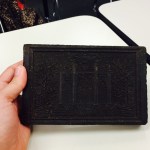
This is what the tea that was dumped into the Boston Harbor would have looked like. In the 1700s, tea was compressed into planks; a plank this size could last a person roughly a year. They would be bought in sections, and small slivers would be shaved off into the kettle every time somebody wanted to make a cup of tea.
this is also fucking neat but someone censored my fucking swearing so i have to fucking put it back in this thread like who the fuck does that kind of shit and can i throw their fucking tea in the ocean for it
I’ve reblogged this before, but actually it’s NOT what the tea was like at all.
This small glass bottle contains tea leaves gathered on the shore of
Dorchester Neck, across the harbor from Boston, on 17 December 1773, the
morning after the Boston Tea Party. This is one of five relics of the
Boston Tea Party (including tea caddies said to have been emptied at the
Tea Party, and a china punch bowl from which participants are said to
have drunk) in the collections of the Massachusetts Historical Society.
This was added before my bit by another poster, @ladysmatter , as well:
I hate to be the person who debunks ‘cool facts’…
Historically,
tea was sold in several different forms. Tea was pressed into bricks
for trade in and around China in times past, but brick tea was NOT
imported to Europe and America in the 18th century. The tea chests
dumped into Boston harbor were full of loose leaf tea, just like you can
buy today if you are feeling too posh for teabags. Read MUCH more about
it at this History Myths Debunked blog post and at the Boston Tea Party Museum’s website.



















 ruby-dear archive
