I told this story to a few guildies a while back and decided to archive it in a longer format; so here is the story of The Great Flamingo Uprising of 2010 as told to me by my favorite cousin who was a keeper at the time.
In addition to the aviary/jungle exhibit, our zoo has several species of birds that pretty much have the run of the place. They started with a small flock of flamingos and some free-range peacocks that I’m almost certain came from my old piano teacher’s farm. She preferred them to chickens. At some point in time they also acquired a pair of white swans (Or as I call them, “hellbirds”) and some ornamental asian duckies to decorate the pond next to the picnic area. Pigeons, crows, assorted ducks and a large number of opportunistic Canada geese moved in on their own.
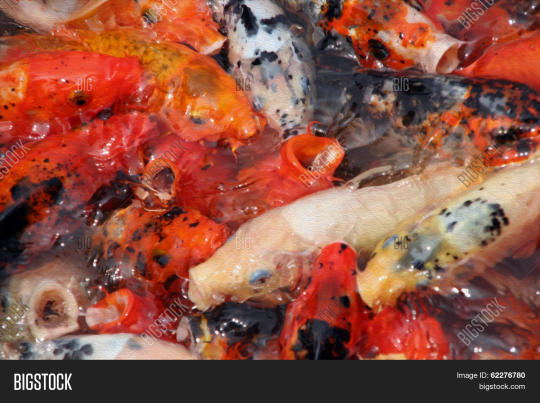
Now; the ponds that dot the zoo property (I don’t remember how many there are but the one by the picnic area is the only one with swans) were also full of ginormous koi fish, some of whom by now are at least three feet long. Sensing an opportunity to cash in on the koi, the zoo put up little vending machines all over the place that dispense handfuls of food pellets. I swear to god the fish can hear the crank turning, and will show up at the nearest railing, blooping expectantly at whoever happens to be standing there and doing their best to appear starving and desperate.
Like this.^ And they weren’t the only ones who learned to associate the sound with the imminent arrival of food. The Canada geese knew a good deal when they saw one, and had long since ceased to migrate anyway. They formed roving gangs of thug-geese and staked out their turf around the vending machines, ready to mug anyone with pocket change. Picture yourself as a small child squaring off with a bird fully prepared to strip search you while standing on your feet and yelling “HWAAAAAKK!!” in your face. It’s traumatizing to you and deeply hilarious to your parents.
Anyway.
The flamingos had their spot near the zoo entrance and never seemed to mind the presence of the other birds, as they kept themselves to themselves and didn’t really like the taste of fish pellets. The problem lay in that their shrimp pond was close to a vending machine. Ordinarily that wouldn’t have been an issue at all, but eventually the goose population grew large enough that one of the gangs decided to annex it. Being territorial little shits, they would harass the poor flamingos any time they strayed within ten feet of it. The flamingos tolerated this for years until one day they snapped collectively. Here’s a summary of the incident in chronological order.
1.) It was a hot day, so everyone in question both human and avian, were cranky by the time the zoo even opened. 2.) A few flamingos (let’s call them The Jets) strayed into the radius of the vending machine and were immediately confronted by the indignant hissing geese (The Sharks) 3.) Possibly due to heat and the simple fact that the geese had been giant douchebags for far too long, the flamingos decided fuck it, this time they were going to FIGHT BACK DAMMIT, and swarmed the geese en mass. 4.) Chaos ensued. The geese were outnumbered 4 to 1 but had the advantage of being able to scream for back-up. 5.) Hearing the shrieking Canada geese and the bellowing of the enraged flamingos, the peacocks came to the conclusion that the apocalypse had come upon them and began to gather in the surrounding trees in droves and wail in despair. Or cheer them on, whichever. 6.) NOISE 7.) Apparently one of the siege tactics employed by the geese is to shit explosively all over the sidewalks. Never in the grass. 8.) The geese, having secured reinforcements from all over the zoo, went berserk and proceeded to attack EVERYBODY who had come to watch be they human or otherwise. 9.) The flamingos were chasing/being chased by the geese through the crowd accompanied by cheers/wails from the peacocks in the box seats. 10.) Complete pandemonium when the zoo tram became stalled on the tracks by the flamingo pond due to battling birds. The Jets, sensing these were somehow reinforcements on the side of the Sharks, charged the tram. Adults were doing the duck and cover. So were the ducks. Small children were screaming, adding to the noise. People were slipping on goose shit and hitting the ground in the fetal position, only to be stampeded by the rampaging flamingos. 11.) The koi continued to bloop hopefully for food. 12.) Two of the geese were cornered by a rival gang of their own and were chased into the swan pond. Cue slow-motion. 13.) The swans detected an enemy presence in their territory and by god, SOMEBODY was going to PAY. 14.) The staff were having no luck in breaking up the fight and on the verge of giving up and just building another zoo elsewhere when the hellbirds stormed the battlefield, trumpeting battle-cries, to dispense feathered justice. The staff promptly dropped their brooms and fled. 15.) The uprising was squashed in less than two minutes. Number of casualties was unknown, feathers were flying everywhere and there was enough goose shit to build another bird. One staff member had been knocked to the ground and was left with a melon sized bruise courtesy of one of the hellbirds. Several children were traumatized, probably for life. The zoo eventually removed the vending machine by the flamingos.
The geese went back to being giant douchebags. Because geese.
birds ❤
I fucking can’t wait to get geese I’m so excited
all this shows is that swans AKA Hellbirds are basically the avian equivalent of tactical nuclear strikes
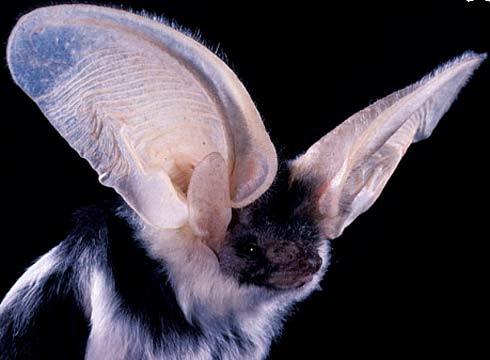
Have you ever thought to yourself, “Man, I wish there was an animal with ears one-third the length of its entire body.”
WELL CONGRATULATIONS, SPOTTED BATS EXIST
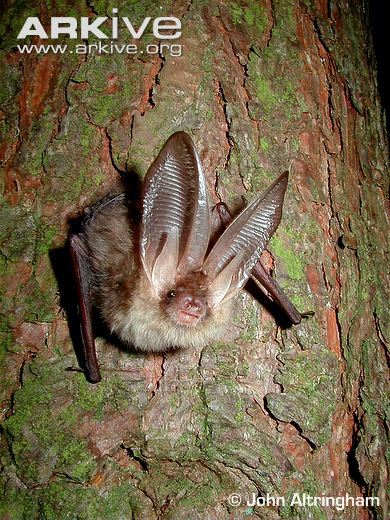
But maybe now you’re thinking, “that’s cool and all, but like, isn’t there an animal with like, ears that take up FOUR-FIFTHS of its body? Because that would really make my day…”
Again, CONGRATULATIONS.
That’s the brown long-eared bat, and it is good at hearing.
But you, eternally unsatisfied, mutter under your breath, “I mean cool but what if the animal also had a nose that was-”
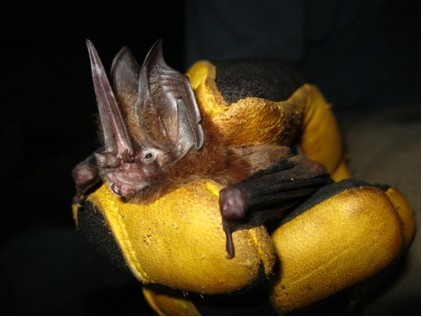
STOP. LOOK AT WHAT I AM HOLDING IN MY HAND*.
That’s a sword-nosed bat and he JUST. DOESN’T CARE. ABOUT YOUR ARBITRARY BODY STANDARDS.
(*sadly that is not actually my hand in the photo)
Now, looking at these bats all together, your desire for increasingly unattainable body types satisfied, you may next find yourself pondering this:
“The bat is the only species of mammal with true powered flight, and also the only flying species, ever, to have external ears. How the heck are they able to fly without those ears (and sometimes noses!) presenting a significant problem? Wouldn’t they act like big, awkward parachutes strapped to the nose of a plane?”
Well friend, this is also what many scientists also thought, when examining the species of bats with exceptionally large ears. They figured that the increased drag caused by facial appendages was just a trade-off that the bats had to deal with in order to get better echolocation abilities to seek out their prey. The fact that most big-eared bats were slow-flying ambush predators rather than zippy little jet fighters seemed to confirm this.
However, no one actually tested the theory until 2015, when scientists from Bristol University ordered a bunch of bat heads from various bat labs (yes… actual heads from actual deceased bats), scanned them, 3D printed them, attached them to dummies, and put them in a wind tunnel.
Thaaaaaaat’s science!
To spare you a lot of physics talk, what they found was that big ears and big noseleaves aren’t causing significant drag for flying bats at all. Or rather, they ARE causing drag, but it’s offset by the fact that they also generate LIFT, which cancels out the drag and sometimes even improves the flying capabilities of the bat! Indeed, the lift generated by big ears may even help bats keep their heads up as they fly, which is important because they need to direct their echolocation beam as they move.
So big ears = no problem bucko. Again, bats prove themselves unique compared to every other flying animal.
One final note on bats with big ears, because it’s cute. While they may pose no problem- and even be helpful- while flying, these big ears can get in the way while the bat is roosting, trying to fit into crevices, socialize, and such. But the bats have a creative solution for this, too. They just curl up their ears. Below are spotted bats and brown long-eared bats, the same two species depicted at the beginning of the post:
We usually see “elephants”—or “wolves” or “killer whales” or “chimps” or
“ravens” and so on—as interchangeable representatives of their kind.
But the instant we focus on individuals, we see an elephant named Echo
with exceptional leadership qualities; we see wolf 755 struggling to
survive the death of his mate and exile from his family; we see a lost
and lonely killer whale named Luna who is humorous and stunningly
gentle. We see individuality. It’s a fact of life. And it runs deep.
Very deep.
Individuality
is the frontier of understanding non-human animals. But for decades, the
idea was forbidden territory. Scientists who stepped out of bounds
faced withering scorn from colleagues. Jane Goodall experienced just
that. After her first studies of chimpanzees, she enrolled as a doctoral
student at Cambridge. There, as she later recalled in National
Geographic, “It was a bit shocking to be told I’d done everything wrong.
Everything. I shouldn’t have given them names. I couldn’t talk about
their personalities, their minds or their feelings.” The orthodoxy was:
those qualities are unique to humans.
But these
decades later we are realizing that Goodall was right; humans are not
unique in having personalities, minds and feelings. And if she’d given
the chimpanzees numbers instead of names?—their individual personalities
would still have shined.
“If ever there
was a perfect wolf,” says Yellowstone biologist Rick McIntyre, “It was
Twenty-one. He was like a fictional character. But real.” McIntyre has watched free-living wolves for
more hours than anyone, ever.
Even from a
distance Twenty-one’s big-shouldered profile was recognizable. Utterly
fearless in defense of his family, Twenty-one had the size, strength,
and agility to win against overwhelming odds. “On two occasions, I saw
Twenty-one take on six attacking wolves—and rout them all,” Rick says.
“Watching him felt like seeing something that looked supernatural. Like
watching a Bruce Lee movie. I’d be thinking, ‘A wolf can’t do what I am
watching this wolf do.’” Watching Twenty-one, Rick elaborates, “was like
watching Muhammad Ali or Michael Jordan—a one-of-a-kind talent outside
of ‘normal.’”
Twenty-one was a
superwolf. Uniquely, he never lost a fight and he never killed any
defeated opponent. And yet Twenty-one was “remarkably gentle” with the
members of his pack. Immediately after making a kill he would often walk
away and nap, allowing family members who’d had nothing to do with the
hunt eat their fill.
One
of Twenty-one’s favorite things was to wrestle little pups. “And what
he really loved to do,” Rick adds, “was pretend to lose. He just got a
huge kick out of it.” Here was this great big male wolf. And he’d let
some little wolf jump on him and bite his fur. “He’d just fall on his
back with his paws in the air,” Rick half-mimes. “And the
triumphant-looking little one would be standing over him with his tail
wagging.
“The ability to
pretend,” Rick adds, “shows that you understand how your actions are
perceived by others. I’m sure the pups knew what was going on, but it
was a way for them to learn how it feels to conquer something much
bigger than you. And that kind of confidence is what wolves need every
day of their hunting lives.”
In Twenty-one’s
life, there was a particular male, a sort of roving Casanova, a
continual annoyance. He was strikingly good-looking, had a big
personality, and was always doing something interesting. “The best
single word is ‘charisma,’” says Rick. “Female wolves were happy to mate
with him. People absolutely loved him. Women would take one look at
him—they didn’t want you to say anything bad about him. His
irresponsibility and infidelity; it didn’t matter.”
One day,
Twenty-one discovered this Casanova among his daughters. Twenty-one ran
in, caught him, biting and pinning him to the ground. Other pack members
piled in, beating Casanova up. “Casanova was also big,” Rick says, “but
he was a bad fighter.” Now he was totally overwhelmed; the pack was
finally killing him.
“Suddenly
Twenty-one steps back. Everything stops. The pack members are looking at
Twenty-one as if saying, ‘Why has Dad stopped?’” The Casanova wolf
jumped up and—as always—ran away.
After
Twenty-one’s death, Casanova briefly became the Druid pack’s alpha male.
But, Rick recalled: “He doesn’t know what to do, just not a leader
personality.” And although it’s very rare, his year-younger brother
deposed him. “His brother had a much more natural alpha personality.”
Casanova didn’t mind; it meant he was free to wander and meet other
females. Eventually Casanova and several young Druid males met some
females and they all formed the Blacktail pack. “With them,” Rick
remembers, “he finally became the model of a responsible alpha male and a
great father.”
The personality of a wolf ‘matriarch’ also helps shape the
whole pack. Wolf Seven was the dominant female in her pack. But you
could watch Seven for days and say, ‘I think she’s in charge,’ because
she led subtly, by example. Wolf Forty, totally different; she led with
an iron fist. Exceptionally aggressive, Forty had done something unheard
of: actually deposed her own mother.
For three
years, Forty ruled the Druid pack tyrannically. A pack member who stared
a moment too long would find herself slammed to the ground, Forty’s
bared canines poised above her neck. Yellowstone research director Doug
Smith recalls, “Throughout her life she was fiercely committed to always
having the upper hand, far more so than any other wolf we’ve observed.”
Forty heaped her worst abuse on her same-age sister. Because this sister
lived under Forty’s brutal oppression, she earned the name Cinderella.
One year
Cinderella split from the main pack and dug a den to give birth. Shortly
after she finished the den, her sister arrived and delivered one of her
infamous beatings. Cinderella just took it, as always. No one ever saw
any pups at that den.
The next year,
Cinderella, Forty, and a low-ranking sister all gave birth in dens dug
several miles apart. New wolf mothers nurse and guard constantly; they
rely on pack members for food. That year, few pack members visited the
bad-tempered alpha. Cinderella, though, found herself well assisted at
her den by several sisters.
Six weeks after
giving birth, Cinderella and several attending pack members headed out,
away from her den—and stumbled into the queen herself. Forty
immediately attacked Cinderella with was, even for her, exceptional
ferocity. She then turned her fury onto another of her sisters who’d
been accompanying Cinderella, giving her a beating too. Then as dusk
settled in, Forty headed toward Cinderella’s den. Only the wolves saw
what happened next, but Doug Smith and Rick McIntyre pieced together
what went down.
Unlike the
previous year, this time Cinderella wasn’t about to remain passive or
let her sister reach her den and her six-week-old pups. Near the den a
fight erupted. There were at least four wolves, and Forty had earned no
allies among them.
At dawn, Forty
was down by the road covered in blood, and her wounds included a neck
bite so bad that her spine was visible. Her long-suffering sisters had,
in effect, cut her throat. She died. It was the only time researchers
have ever known a pack to kill its own alpha. Forty was an
extraordinarily abusive individual. The sisters’ decision, outside the
box of wolf norms, was: mutiny. Remarkable.
But Cinderella
was just getting started. She adopted her dead sister’s entire brood.
And she also welcomed her low-ranking sister and her pups. And so that
was the summer that the Druid Peak pack raised an unheard-of twenty-one
wolf pups together in a single den.
Out from under Forty’s brutal reign, Cinderella developed into the
pack’s finest hunter. She later went on to become the benevolent
matriarch of the Geode Creek pack. Goes to show: a wolf, as many a
human, may have talents and abilities that wither or flower depending on
which way their luck breaks.
“Cinderella was
the finest kind of alpha female,” Rick McIntyre says. “Cooperative,
returning favors by sharing with the other adult females, inviting her
sister to bring her pups together with her own while also raising her
vanquished sister’s pups—. She set a policy of acceptance and cohesion.”
She was, Rick says, “perfect for helping everyone get along really
well.”


 ruby-dear archive